Project Management SOPs: Guide & Free Templates (2026)


The Importance of SOPs in Project Management: A Comprehensive Guide
Here is a sobering reality: According to the Project Management Institute (PMI), organizations waste an average of $97 million for every $1 billion invested due to poor project performance. The Standish Group's CHAOS Report reveals that only 35% of projects are considered successful, while 19% fail outright and 46% are "challenged"—delivered late, over budget, or with reduced functionality. Behind these statistics lies a common thread: inconsistent processes, unclear responsibilities, and a lack of standardized approaches to project execution.
The solution? Standard Operating Procedures (SOPs) specifically designed for project management. Organizations that implement robust project management SOPs see dramatic improvements in delivery rates, team efficiency, and stakeholder satisfaction. This comprehensive guide explores why SOPs are essential for project success, provides specific examples you can adapt immediately, and offers strategies for implementing SOPs across both Agile and Waterfall methodologies.
Key Takeaways
- Project failure is expensive: PMI reports that poor project performance wastes $97 million per $1 billion invested, making standardized processes a financial imperative
- SOPs dramatically improve success rates: Organizations with mature project management practices complete 2.5x more projects successfully than those without
- Three essential SOPs form the foundation: Project kickoff, risk management, and status reporting procedures address the most common causes of project failure
- Methodology matters: SOPs must be adapted for Agile and Waterfall approaches while maintaining core principles of consistency and accountability
- Continuous improvement is built-in: Well-designed SOPs include feedback mechanisms that help teams learn and optimize over time
There's a ready-made version of this
Your project kickoff checklist is already live at yourcompany.dewstack.com, with agenda, RACI matrix and comms plan included. Edit it, don't start it.
Preview itNo credit card. Edit it, don't start it.
Understanding the Project Success Crisis
The numbers paint a stark picture of project management challenges across industries. The Standish Group's research, spanning decades and thousands of projects, consistently shows that project failure is the norm rather than the exception. Their 2020 CHAOS Report found that:
- Only 35% of projects succeed (delivered on time, on budget, with satisfactory results)
- 46% of projects are "challenged" (completed but over budget, late, or with fewer features)
- 19% of projects fail outright (cancelled or delivered but never used)
PMI's Pulse of the Profession report adds context to these failures. The primary causes include inadequate project requirements, poor communication, lack of clear goals, and inconsistent project management practices. Notably, organizations classified as "underperformers" waste 12 times more resources due to poor project performance compared to their high-performing counterparts.
The financial impact extends beyond direct project costs. Failed projects damage client relationships, erode team morale, and create opportunity costs that compound over time. When a team spends six months on a project that ultimately fails, they have lost not just the project investment but also the value of whatever else they could have accomplished.

The Strategic Role of SOPs in Project Management
Standard Operating Procedures transform project management from an art dependent on individual skill into a science that can be taught, measured, and improved. SOPs provide the documented frameworks that ensure every project benefits from accumulated organizational wisdom rather than starting from scratch.
How SOPs Address Root Causes of Project Failure
Unclear Requirements: SOPs for requirements gathering ensure stakeholders are asked the right questions, requirements are documented in standard formats, and approval processes prevent scope creep.
Poor Communication: Communication SOPs establish cadences for updates, define escalation paths, and ensure information reaches the right people at the right time through effective documentation practices.
Inadequate Planning: Planning SOPs require specific deliverables before project approval, ensuring teams have thought through timelines, dependencies, and resource needs.
Risk Blindness: Risk management SOPs force teams to proactively identify, assess, and plan for potential problems rather than reacting to crises.
The Compounding Value of Standardization
When every project follows standardized procedures, organizations gain capabilities that are impossible with ad-hoc approaches:
Predictability: Stakeholders can accurately forecast delivery timelines because projects follow known patterns. PMI research indicates that organizations with standardized practices meet original goals 77% of the time, compared to 56% for those without.
Scalability: New project managers can quickly become productive because they are learning established processes rather than inventing their own. This reduces dependency on individual "hero" performers.
Measurability: Standardized processes generate comparable data across projects, enabling meaningful benchmarking and trend analysis. Teams can identify which types of projects tend to struggle and why.
Transferability: When team members change roles or leave the organization, their knowledge remains embedded in documented procedures rather than walking out the door with them.
Essential Project Management SOPs Every Team Needs
While every organization will develop SOPs specific to their industry and culture, three categories of procedures address the most common sources of project failure. These foundational SOPs should be priorities for any team looking to improve project outcomes.
Project Kickoff SOP
The project kickoff sets the tone for everything that follows. A poorly executed kickoff leads to misaligned expectations, unclear responsibilities, and problems that compound throughout the project lifecycle. An effective kickoff SOP ensures every project starts with the clarity needed for success.
Purpose and Scope
The Project Kickoff SOP establishes the standard process for formally initiating approved projects, ensuring all stakeholders are aligned on objectives, scope, timeline, and responsibilities before work begins.
Pre-Kickoff Requirements
Before scheduling a kickoff meeting, the project manager must verify:
- Project charter approved with documented business case and success criteria
- Budget allocated and cost center established
- Core team identified with confirmed availability
- Initial scope document reviewed by key stakeholders
- Executive sponsor assigned and briefed
Kickoff Meeting Agenda Template
A standardized agenda ensures consistent coverage of critical topics:
1. Welcome and Introductions (10 minutes)
- Team member introductions including roles
- Stakeholder introductions and their interests in the project
2. Project Overview (15 minutes)
- Business context and strategic alignment
- Problem being solved or opportunity being captured
- Success criteria and key performance indicators
3. Scope Review (20 minutes)
- In-scope deliverables with acceptance criteria
- Explicitly out-of-scope items
- Known constraints and assumptions
4. Timeline and Milestones (15 minutes)
- Key phases and major milestones
- Dependencies on external teams or systems
- Critical path activities
5. Roles and Responsibilities (15 minutes)
- RACI matrix review for key decisions
- Escalation paths and decision-making authority
- Communication expectations
6. Risk Overview (10 minutes)
- Top identified risks and initial mitigation plans
- Risk reporting cadence
7. Next Steps and Action Items (5 minutes)
- Immediate priorities for each team member
- Date of first status meeting
Post-Kickoff Requirements
Within 48 hours of the kickoff meeting:
- Distribute meeting notes to all attendees and stakeholders
- Publish the project charter to the central documentation repository
- Schedule recurring status meetings
- Create project workspace with standard folder structure
- Send individual welcome messages to team members with onboarding materials
Risk Management SOP
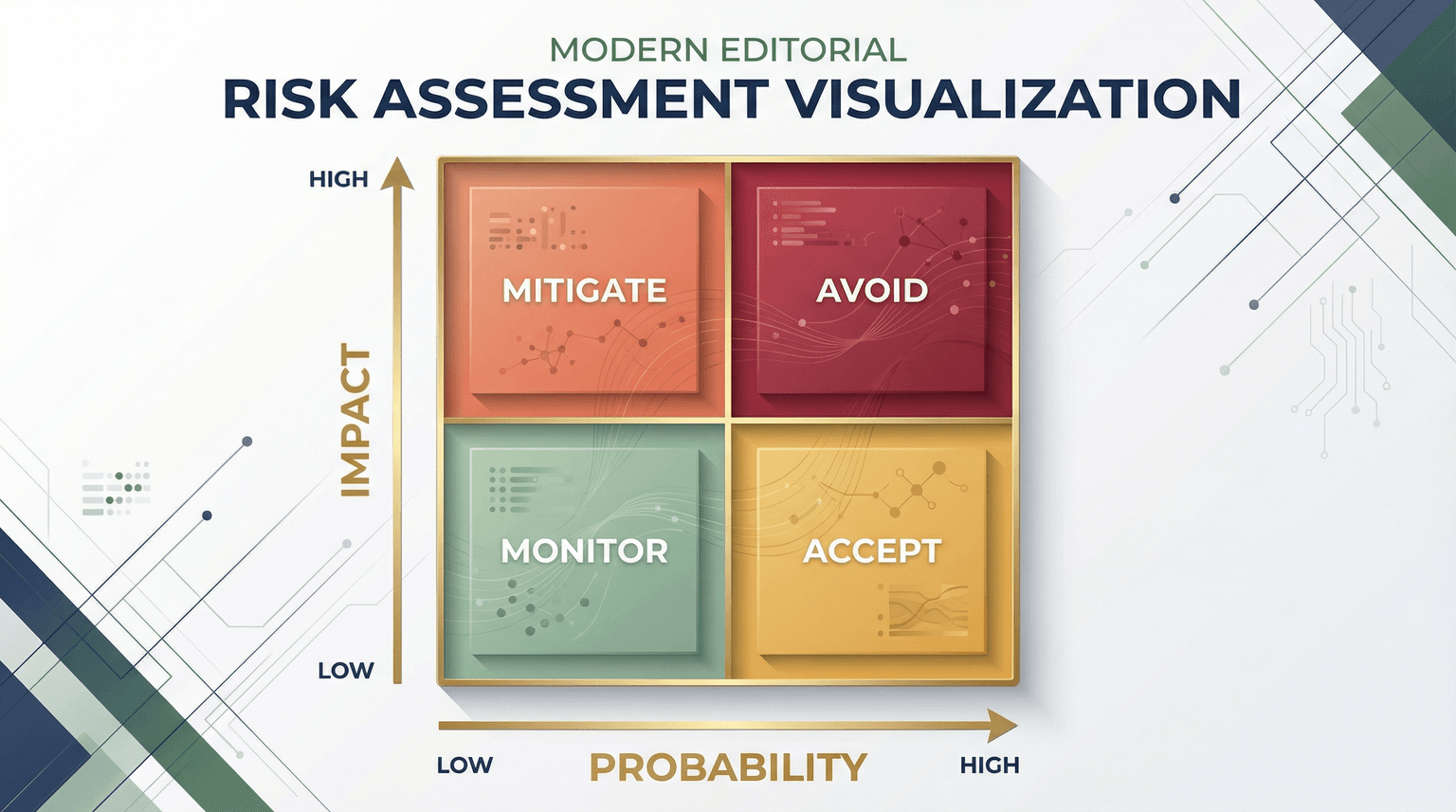
Projects rarely fail due to risks that nobody saw coming. They fail because identified risks were not properly tracked, communicated, or mitigated. A robust Risk Management SOP transforms risk from an afterthought into a proactive discipline.
Purpose and Scope
The Risk Management SOP defines how project teams identify, assess, respond to, and monitor risks throughout the project lifecycle using comprehensive documentation approaches.
Risk Identification Process
Initial Risk Identification Workshop
Conduct within two weeks of project kickoff:
- Review historical data from similar past projects
- Brainstorm risks across standard categories:
- Technical risks (complexity, integration, performance)
- Resource risks (availability, skills, turnover)
- Schedule risks (dependencies, estimates, external factors)
- Scope risks (requirements changes, stakeholder alignment)
- External risks (vendor reliability, regulatory changes, market shifts)
- Document each risk with clear description and potential impact
- Assign risk owner responsible for monitoring and response
Ongoing Risk Identification
- Include risk identification as standing agenda item in all project meetings
- Encourage team members to submit risks through standard intake form
- Review lessons learned from other projects monthly
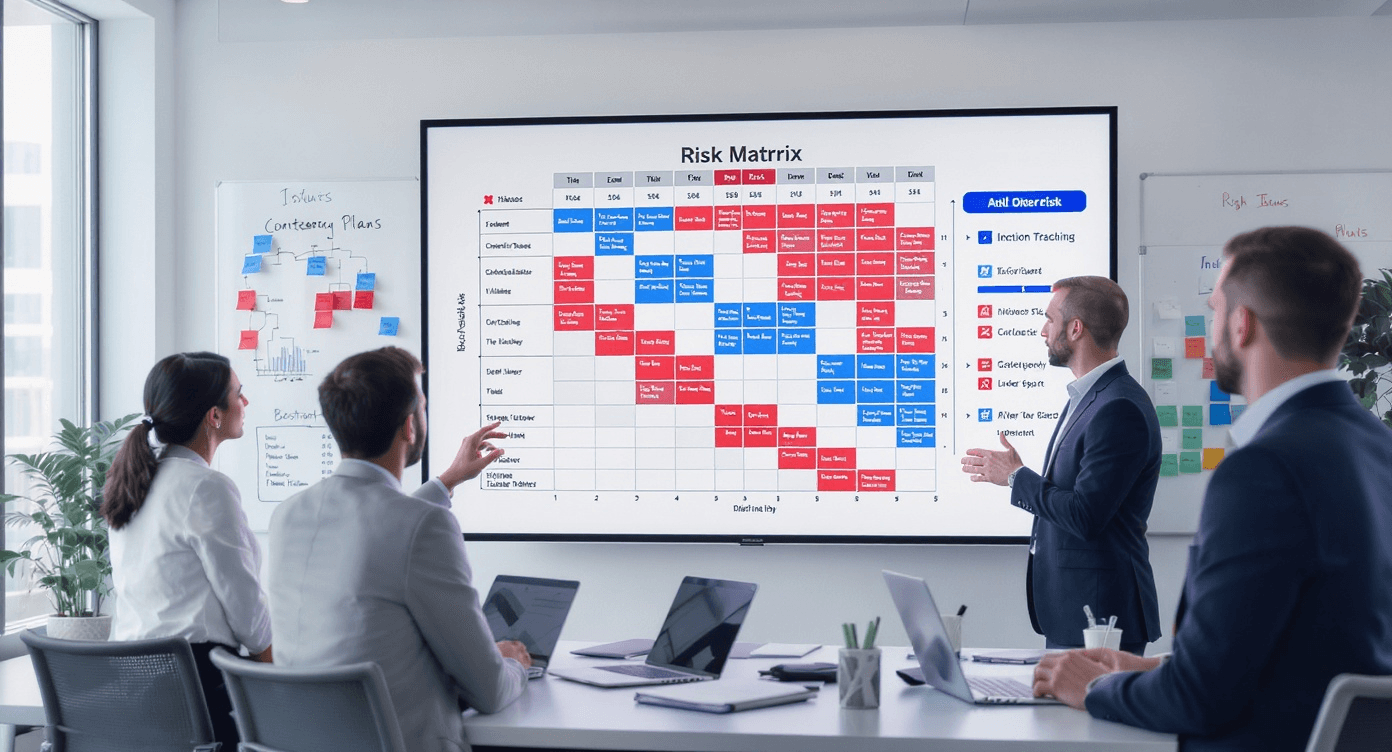
Risk Assessment Matrix
Evaluate each risk on two dimensions:
Probability Scale
- 1 (Rare): Less than 10% likelihood
- 2 (Unlikely): 10-25% likelihood
- 3 (Possible): 25-50% likelihood
- 4 (Likely): 50-75% likelihood
- 5 (Almost Certain): Greater than 75% likelihood
Impact Scale
- 1 (Negligible): Minimal impact on schedule, budget, or scope
- 2 (Minor): Less than 5% impact on project parameters
- 3 (Moderate): 5-10% impact, requires management attention
- 4 (Major): 10-25% impact, requires executive attention
- 5 (Severe): Greater than 25% impact, project viability threatened
Risk Score: Probability x Impact
- Scores 1-6: Low risk, monitor quarterly
- Scores 7-12: Medium risk, monitor monthly, develop response plans
- Scores 13-19: High risk, monitor weekly, implement response plans
- Scores 20-25: Critical risk, immediate escalation and daily monitoring
Risk Response Strategies
For each significant risk, document one of four response strategies:
- Avoid: Change project plan to eliminate the risk
- Transfer: Shift risk to third party (insurance, contracts, outsourcing)
- Mitigate: Take action to reduce probability or impact
- Accept: Acknowledge risk and prepare contingency if it occurs
Get this risk assessment matrix as a live site
Your risk assessment matrix is already live at yourcompany.dewstack.com, with 5x5 heat map, register and response strategies included. Edit it, don't start it.
Start free and get it liveNo credit card. Edit it, don't start it.
Risk Reporting Requirements
- Weekly: Update risk register with current status
- Bi-weekly: Include top 5 risks in status report
- Monthly: Present risk analysis to steering committee
- Immediately: Escalate any risk that moves to critical status
Status Reporting SOP

Consistent, meaningful status reports keep stakeholders informed and enable timely intervention when projects drift off course. The Status Reporting SOP ensures communication happens at the right frequency with the right content.
Purpose and Scope
The Status Reporting SOP establishes standards for project progress communication to ensure stakeholders receive timely, accurate, and actionable information through effective knowledge sharing.
Report Types and Frequency
Weekly Team Status
- Audience: Project team and immediate stakeholders
- Format: Email or collaboration tool update
- Due: End of day Friday
Bi-Weekly Stakeholder Report
- Audience: Project sponsor and key stakeholders
- Format: Standardized template (1-2 pages)
- Due: Every other Monday
Monthly Executive Summary
- Audience: Executive leadership and steering committee
- Format: Presentation deck (5-7 slides)
- Due: First week of each month
Standard Report Components
Project Health Indicators
Use traffic light system for quick status assessment:
- Green: On track, no significant issues
- Yellow: Minor issues being managed, requires attention
- Red: Significant issues threatening project success, requires intervention
Rate each dimension:
- Schedule health
- Budget health
- Scope health
- Resource health
- Risk health
Progress Summary
- Accomplishments since last report
- Planned activities for next period
- Milestone status and any date changes
Issues and Risks
- New issues identified
- Issues resolved
- Risk status changes
- Items requiring stakeholder decisions
Metrics Dashboard
- Percent complete (scope-based, not time-based)
- Budget consumed vs. planned
- Resource utilization
- Quality metrics (defects, rework)
Escalation Triggers
Status reports must include immediate escalation when:
- Project health changes to red in any dimension
- Budget variance exceeds 10%
- Schedule slippage exceeds 2 weeks
- Key resource becomes unavailable
- Scope change impacts critical requirements
Agile vs Waterfall: Adapting SOPs for Different Methodologies
Project management SOPs must flex to accommodate different methodologies while maintaining their core purpose of standardization and consistency. Both Agile and Waterfall approaches benefit from SOPs, but the implementation details differ significantly.
Waterfall SOP Considerations
Waterfall projects follow sequential phases with defined gates between them. SOPs for Waterfall should emphasize:
Phase Gate Requirements
Define specific deliverables and approval criteria for each phase transition:
- Requirements phase: Approved requirements document, signed off by business stakeholders
- Design phase: Technical design reviewed and approved by architecture team
- Development phase: Code complete with unit tests passing
- Testing phase: Test plan executed, defects resolved to acceptance criteria
- Deployment phase: Go-live checklist completed, rollback plan documented
Change Control Procedures
Waterfall projects require formal change control because changes late in the lifecycle are expensive:
- Change request submission format
- Impact assessment requirements (schedule, budget, quality)
- Change control board composition and meeting cadence
- Approval authority levels based on change magnitude
Documentation Standards
Waterfall relies heavily on documentation as the primary knowledge transfer mechanism:
- Required documents for each phase
- Template standards and review processes
- Version control and archive requirements
Agile SOP Considerations
Agile projects embrace change and iterative delivery. SOPs for Agile should preserve flexibility while ensuring consistency:
Sprint Ceremonies
Standardize ceremony execution without constraining content:
- Sprint Planning: Duration based on sprint length, required attendees, definition of ready for stories
- Daily Standup: Time, location, format (what did, what will do, blockers)
- Sprint Review: Demo format, stakeholder invitation process, feedback capture
- Sprint Retrospective: Facilitation rotation, action item tracking, improvement implementation
Backlog Management
Create standards for backlog health:
- Story writing format (user story template, acceptance criteria requirements)
- Estimation approach (story points, t-shirt sizing) and calibration process
- Refinement cadence and participation expectations
- Definition of ready and definition of done
Agile Metrics and Reporting
Adapt reporting SOPs for iterative delivery:
- Velocity tracking and trend analysis
- Sprint burndown expectations
- Release burnup and forecasting
- Continuous improvement metrics
Hybrid Approach SOPs
Many organizations use hybrid approaches, applying Agile practices within a Waterfall governance structure. SOPs for hybrid environments should:
- Clearly define which practices apply at which level
- Map Agile artifacts to Waterfall gate requirements
- Establish translation mechanisms between iteration metrics and traditional reporting
- Define escalation paths that respect both team autonomy and organizational oversight
Key Benefits of Implementing Project Management SOPs
Organizations that invest in comprehensive project management SOPs realize benefits that extend far beyond individual project success.
Improved Consistency and Predictability
When every project follows the same fundamental processes, outcomes become more predictable. PMI research shows that high-performing organizations—those with mature, standardized practices—successfully complete 77% of projects versus 56% for low performers. This consistency enables:
- More accurate project portfolio planning
- Better resource allocation across projects
- Reliable commitments to customers and stakeholders
Accelerated Onboarding and Knowledge Transfer
New team members become productive faster when they can reference established procedures rather than learning through trial and error. SOPs serve as both training materials and ongoing reference resources, using effective documentation management approaches:
- Reduce time-to-productivity for new project managers
- Enable cross-training and backup coverage
- Preserve institutional knowledge when team members transition
Enhanced Quality and Reduced Rework
Quality checkpoints embedded in SOPs catch problems early when they are cheapest to fix:
- Standardized review processes ensure consistent quality gates
- Documented acceptance criteria reduce disputes about deliverable completeness
- Lessons learned integration prevents repeat mistakes
Stronger Compliance and Audit Readiness
For regulated industries, SOPs provide evidence of consistent, controlled processes:
- Documented procedures demonstrate due diligence
- Audit trails show that processes were followed
- Training records prove team competence
Foundation for Continuous Improvement
Well-designed SOPs include mechanisms for capturing and incorporating improvements:
- Retrospective findings feed into procedure updates
- Metrics enable identification of process bottlenecks
- Version control tracks the evolution of practices over time
Crafting Robust SOPs for Your Organization
Creating effective project management SOPs requires balancing comprehensiveness with usability. Overly detailed procedures become shelfware that nobody follows; overly brief ones fail to provide meaningful guidance.
Essential Components of Every SOP
Purpose Statement: Clearly explain why the SOP exists and what problem it solves. Teams are more likely to follow procedures when they understand the reasoning.
Scope Definition: Specify which projects, phases, or situations the SOP applies to. Include explicit statements about what is out of scope.
Roles and Responsibilities: Identify who performs each step and who has approval authority. Use RACI matrices for complex procedures.
Step-by-Step Procedures: Provide clear, actionable instructions. Use numbered steps, decision trees, or flowcharts as appropriate.
Templates and Tools: Reference or include standard templates, checklists, and tools that support the procedure.
Metrics and Success Criteria: Define how compliance and effectiveness will be measured.
Review and Update Process: Specify how often the SOP will be reviewed and who owns updates.
Best Practices for SOP Development
Involve Practitioners: The people who will follow the SOP should help create it. Their input ensures practicality and increases buy-in.
Start with Pain Points: Focus initial SOP development on areas where inconsistency causes the most problems. Quick wins build momentum for broader standardization.
Write for the Reader: Use clear, direct language. Avoid jargon and acronyms unless they are universally understood by the audience.
Make SOPs Findable: A brilliant SOP that nobody can locate provides no value. Invest in knowledge base organization and search capabilities.
Test Before Rollout: Pilot SOPs with a small group before organization-wide deployment. Incorporate feedback and refine.
Train Deliberately: Do not assume that publishing an SOP means people will read and follow it. Conduct training sessions and verify understanding.
Tools and Templates for SOP Creation
Modern tools can dramatically accelerate SOP development and improve accessibility.
Document Creation Platforms
Microsoft Word and Google Docs: Familiar interfaces make these tools accessible for straightforward SOPs. Version history and commenting support collaboration.
Confluence and Notion: Wiki-style platforms enable interconnected documentation where SOPs can link to related resources, templates, and other procedures.
Specialized SOP Software: Platforms like Dewstack's SOP creation tools offer purpose-built features including workflow integration, version control, and analytics.
Visual Documentation Tools
Lucidchart and Miro: Create flowcharts and process diagrams that make complex procedures easier to understand at a glance.
Loom and Screen Recording: Video walkthroughs can supplement written procedures for software-based processes.
Template Libraries
Start with industry-standard templates and customize for your organization:
- PMI provides templates aligned with PMBOK standards
- Industry associations often publish sector-specific templates
- SOP management platforms typically include quick-start templates
Common Questions About Project Management SOPs
How detailed should project management SOPs be?
SOPs should be detailed enough that a competent professional can follow them without additional guidance, but not so detailed that they become unwieldy. Focus on decision points, quality gates, and areas where consistency matters most. Allow room for professional judgment in areas where flexibility is appropriate.
How often should SOPs be reviewed and updated?
At minimum, review SOPs annually and after any significant project failure or success that reveals process improvements. Establish a formal review cycle and assign ownership for each SOP. Track version history and communicate changes to affected teams.
How do you get teams to actually follow SOPs?
Compliance requires a combination of factors: SOPs must be practical and add value (not bureaucratic overhead), leadership must visibly support standardization, training must be provided, and there must be some mechanism for accountability. Consider incorporating SOP compliance into project audits or performance reviews.
Can SOPs coexist with Agile principles?
Absolutely. Agile values individuals and interactions over processes and tools, but this does not mean processes have no place. Well-designed Agile SOPs standardize the framework within which teams self-organize. They ensure consistency in ceremonies, artifacts, and metrics while preserving flexibility in how teams solve problems.
What is the difference between SOPs and project plans?
SOPs describe how to do something and apply across multiple projects. Project plans describe what will be done on a specific project. SOPs inform project plans—for example, a Risk Management SOP describes the process that generates the risk register included in a project plan.
Conclusion: Building a Culture of Consistent Excellence
The statistics are clear: project failure remains endemic across industries, and the costs—financial, reputational, and human—are substantial. Standard Operating Procedures offer a proven path to better outcomes by transforming project management from an art dependent on individual heroics into a discipline that can be taught, measured, and continuously improved.
Implementing project management SOPs is not about bureaucracy or constraining creativity. It is about ensuring that every project benefits from accumulated organizational wisdom, that teams spend their energy on solving novel problems rather than reinventing basic processes, and that stakeholders can rely on consistent, predictable delivery.

The three foundational SOPs outlined in this guide—project kickoff, risk management, and status reporting—address the most common causes of project failure. Start there, measure the impact, and expand your SOP library based on where your organization experiences the most pain.
Remember that SOPs are living documents. Build in feedback mechanisms, conduct regular reviews, and celebrate improvements. Over time, your project management SOPs will become a competitive advantage—a repository of best practices that enables your organization to deliver consistently while others struggle with reinvention on every project.
Streamline Your Project SOPs with Dewstack
Effective project management requires SOPs that are accessible, up-to-date, and easy to follow. Dewstack empowers project teams to create documentation that keeps everyone aligned from kickoff to delivery.
Capture best practices on the go: Dewstack's browser extension lets project managers document workflows, meeting protocols, and decision trees as they work. No more reconstructing processes after the fact—build your SOPs in real-time.
Let AI accelerate your documentation: Dewstack's AI-powered SmartDocs helps you draft comprehensive project SOPs faster, suggests improvements for clarity, and provides instant answers to team member questions. Keep projects moving without documentation bottlenecks.
One source of truth for all project docs: Import templates, checklists, and existing procedures from any platform. Dewstack unifies your project documentation in a searchable, version-controlled hub accessible to every stakeholder.
Analytics that drive improvement: Track which SOPs are being accessed, identify training gaps, and continuously refine your project management processes based on real usage data. Custom domains and branding make your project portal feel distinctly yours.
Ready to transform how your teams access and follow project SOPs? Try Dewstack for free and give your projects the documentation advantage they deserve — check the pricing page for plan options.
Ready to Elevate Your Documentation?
Try Dewstack free for 7 days. Create AI-powered documentation that answers questions instantly.
Start a free trialANSWERS TO
Frequently Asked Questions
Here are some common questions that might provide the information you're seeking.
Related Blogs
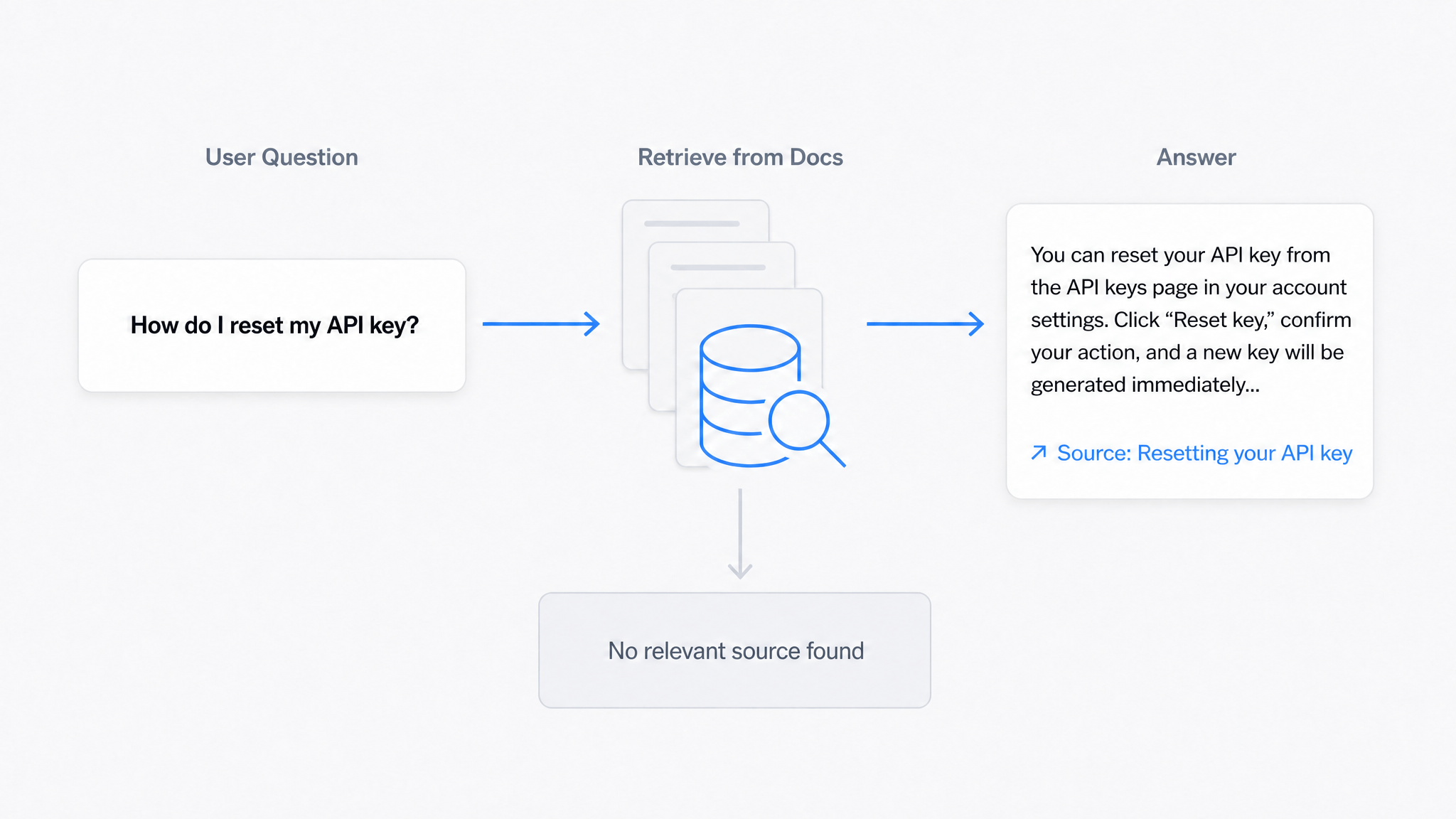
AI Answers From Your Docs: Grounded Answers, Citations & Hallucination Control
How an AI chatbot for technical documentation gives grounded answers with source citations, controls hallucinations, and turns unanswered questions into drafted pages.
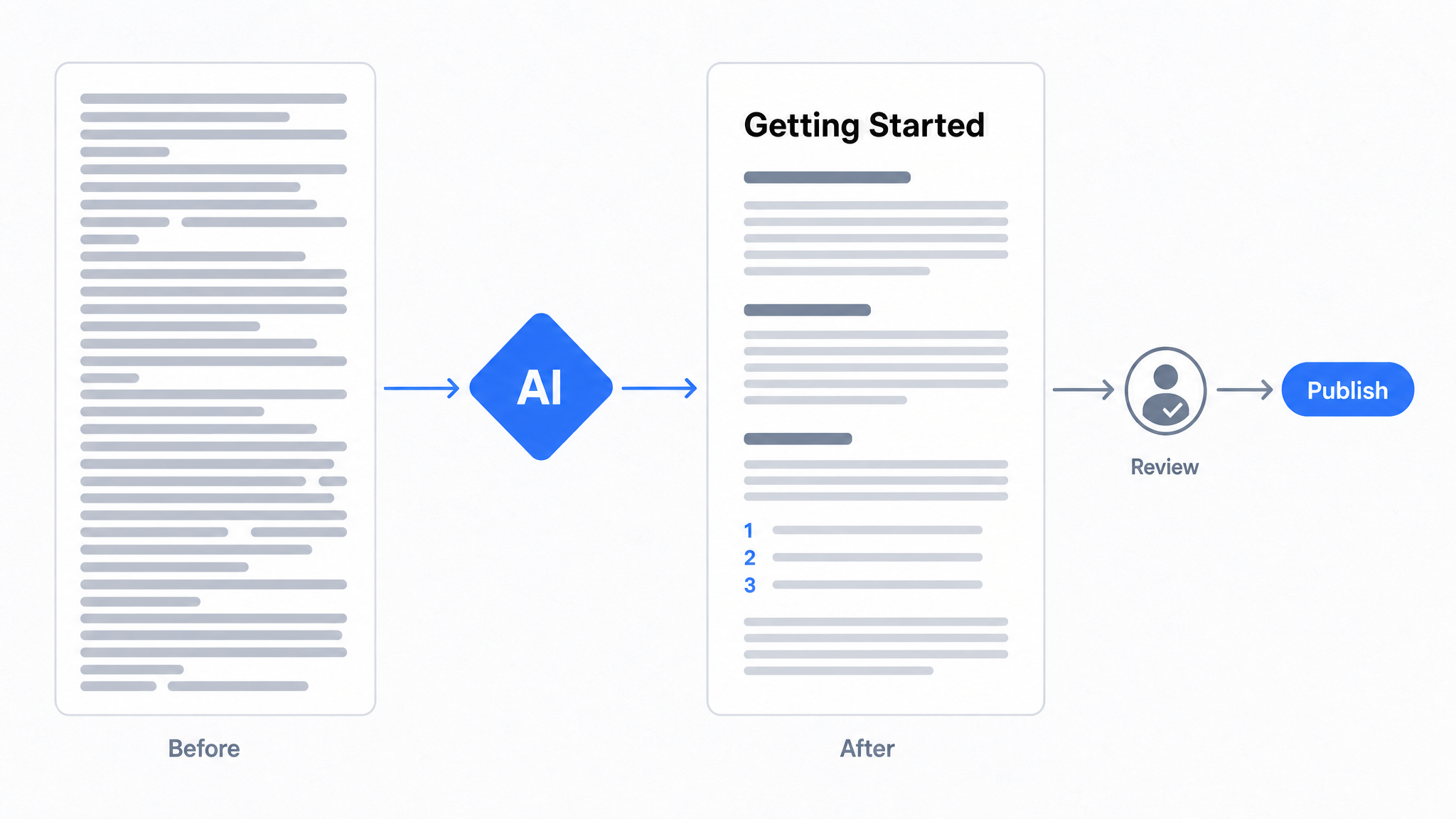
How to Use AI to Improve Existing Documentation
Use AI to audit, rewrite, and translate the documentation you already have, and let a connected agent draft improvements to stale pages for a human to publish.
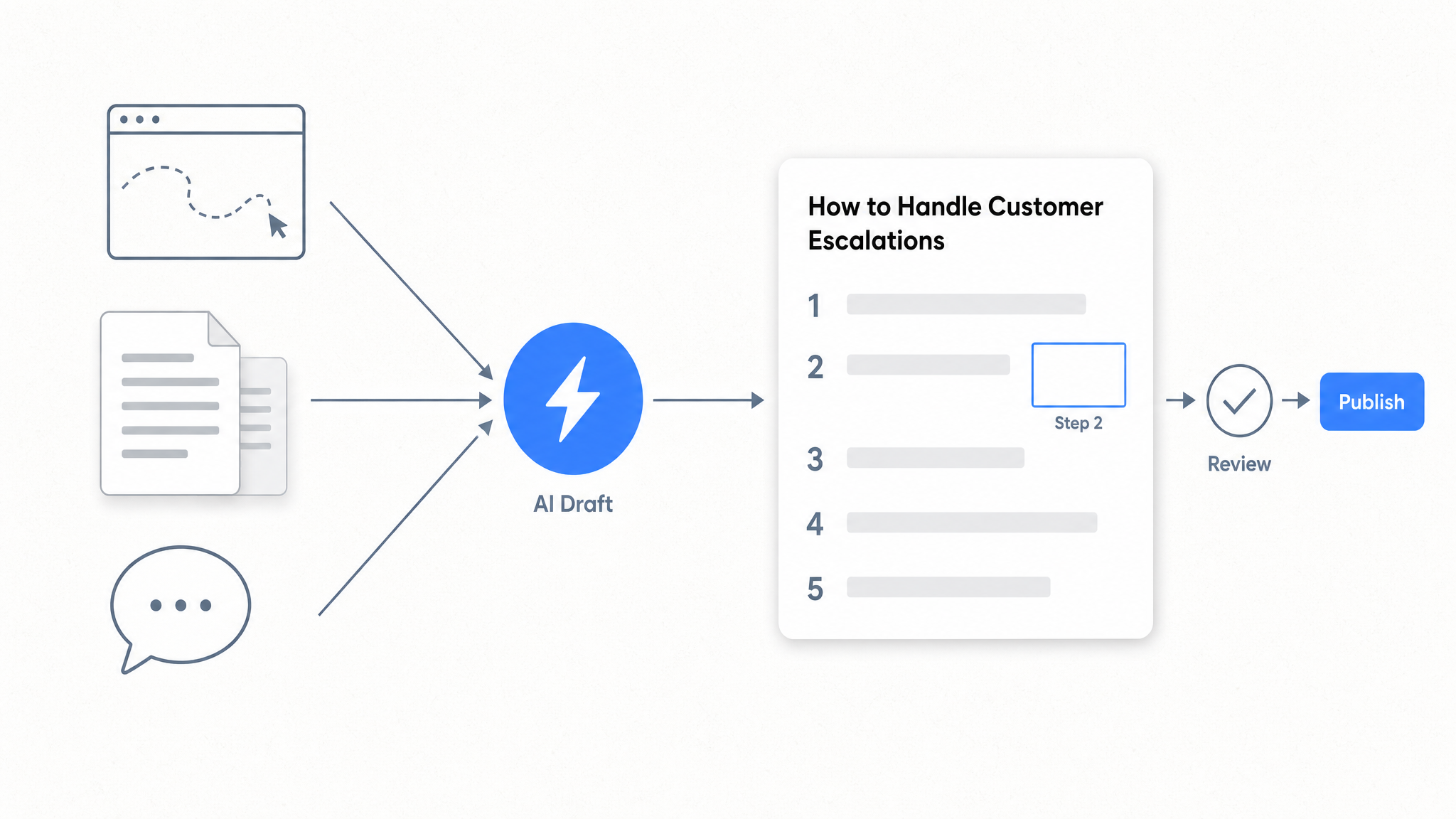
How to Automate SOP Creation with AI
Capture a workflow, let AI draft the SOP, review it, and publish it to a searchable knowledge base your team can query around the clock.
Ready to get started with Dewstack?
Try Dewstack free for 7 days. Create AI-powered documentation that answers questions instantly.
No credit card required.