How Neglecting User Guides Can Sink Your Product


How Neglecting User Guides Can Sink Your Product

Key Takeaways
- 73% of consumers say customer experience influences their purchasing decisions (PwC)
- Poor documentation increases support costs by 20-30% (TSIA)
- Products with good documentation see 45% higher adoption rates (Salesforce Research)
- 86% of buyers will pay more for a better customer experience (Superoffice)
- Documentation neglect creates a cascading failure that impacts every department
- Recovery is possible, but prevention through proactive documentation is far more cost-effective
There's a ready-made version of this
Your user manual is already live at yourcompany.dewstack.com, with getting started, features, troubleshooting and glossary all written. Edit it, don't start it.
Preview itNo credit card. Edit it, don't start it.
The Story That Should Terrify Every Product Manager
In 2019, a promising B2B software startup called CloudSync Pro (name changed for privacy) launched what they believed was a revolutionary project management tool. They had raised $12 million in Series A funding, assembled a talented engineering team, and built a product packed with innovative features that competitors simply did not have.
Six months later, they were hemorrhaging customers at an alarming rate. By the end of the year, they had burned through most of their runway and were forced to sell the company at a fraction of their previous valuation.
What went wrong? The product worked. The features were genuinely innovative. The pricing was competitive.
The problem was something far more mundane: nobody could figure out how to use it.
CloudSync Pro had invested millions in development but had allocated virtually nothing to documentation. Their user guide was a hastily written 10-page PDF that covered basic installation but nothing else. There were no tutorials, no video guides, no searchable knowledge base, and no contextual help within the application.
Users would sign up, struggle through the onboarding process, fail to discover the features that made the product special, and quietly cancel their subscriptions. Support tickets piled up faster than the small team could handle them. Negative reviews spread across software review sites. Word-of-mouth, which should have been their greatest growth engine, became their biggest liability.
This story is not unique. Every year, promising products fail not because they lack functionality, but because they lack explanation. The gap between what your product can do and what users understand it can do is often the difference between success and failure.
The Hidden Costs of Documentation Neglect
When product teams discuss documentation, the conversation often centers on the obvious: user guides help customers understand the product. But this surface-level understanding dramatically underestimates the true scope of documentation's impact.
Documentation neglect creates costs that permeate every aspect of your business, many of which remain invisible until they reach critical levels.
The Onboarding Bottleneck
Without comprehensive documentation, every new user becomes a potential support ticket. Consider the math: if your product acquires 1,000 new users per month and 30% of them encounter confusion during onboarding, you are generating 300 support interactions that could have been prevented.
At an average cost of $15-25 per support interaction, that's $4,500 to $7,500 monthly in preventable costs. Over a year, you are looking at $54,000 to $90,000 spent answering questions that good documentation would have addressed proactively.
But the financial cost is only part of the equation. Each of those 300 users experienced friction with your product. Some percentage of them formed a negative first impression that will color their entire relationship with your brand. Others simply gave up entirely.
The Time-to-Value Problem
In the SaaS world, time-to-value is everything. Users who quickly discover the benefits of your product become advocates. Users who struggle to find value become churned customers.
Research consistently shows that users make decisions about software within their first few interactions. If they cannot figure out how to accomplish their goals quickly, they assume the product is not for them, regardless of how powerful it might actually be.
Good documentation accelerates time-to-value by providing clear pathways to success. How-to guides that walk users through common workflows can mean the difference between a user who achieves their first success in 10 minutes versus one who gives up after 30 minutes of frustration.
The Feature Adoption Gap
Most software products contain features that users never discover. Without documentation that highlights capabilities and explains use cases, you are essentially hiding value from the people who paid for it.
This creates a paradox: you invested resources building features that users wanted, but because those features remain undiscovered, users feel the product does not meet their needs. They churn, leaving negative reviews that cite the absence of capabilities your product actually has.
Comprehensive product documentation ensures that every feature you build contributes to user satisfaction rather than sitting unused in the interface.
Customer Churn: The Silent Killer
Customer churn is often called the silent killer of SaaS businesses, and documentation neglect is one of its primary accomplices.
The Frustration Cycle
When users encounter obstacles without documentation to guide them, they enter a frustration cycle that typically follows a predictable pattern:
- Initial Confusion: User attempts to accomplish a task and fails
- Search for Help: User looks for documentation and finds it inadequate or absent
- Support Contact: User submits a ticket or attempts to reach support
- Waiting Period: User either waits for a response or gives up
- Repeated Friction: Cycle repeats with subsequent tasks
Each iteration of this cycle erodes user confidence and satisfaction. By the third or fourth occurrence, many users have already decided to find an alternative solution.
The Numbers Tell the Story
According to PwC research, 73% of consumers say customer experience influences their purchasing decisions. Documentation is a fundamental component of customer experience, though it is often overlooked in favor of flashier touchpoints.
Furthermore, studies from Superoffice reveal that 86% of buyers will pay more for a better customer experience. This means that companies with superior documentation can often command premium pricing while enjoying lower churn rates, a powerful combination for unit economics.
The Cost of Replacement
Acquiring a new customer typically costs 5-25 times more than retaining an existing one. When documentation neglect drives churn, you are not just losing revenue from that customer; you are also incurring the full cost of acquiring their replacement.
For a SaaS business with $100 monthly subscriptions and a $500 customer acquisition cost, each churned customer represents $1,700 in lost value over a 12-month period (the subscription revenue plus the replacement cost). Multiply that across dozens or hundreds of preventable churns, and the financial impact becomes staggering.
Support Team Burnout and Costs
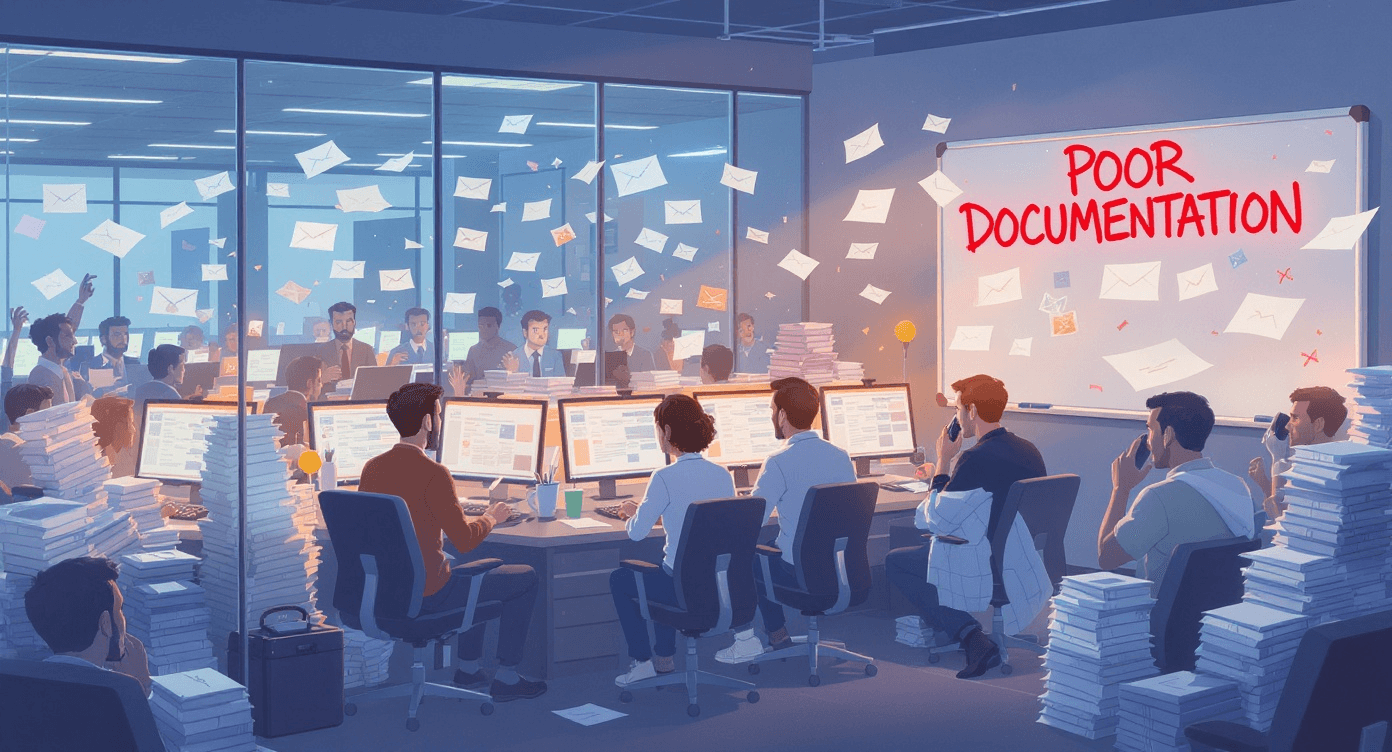
While churn captures lost revenue, support costs represent ongoing operational drain. Poor documentation increases support costs by 20-30% according to TSIA (Technology Services Industry Association) research, but the impact extends beyond direct financial costs.
The Repetitive Question Problem
Without comprehensive documentation, support teams find themselves answering the same questions repeatedly. This is demoralizing for skilled support professionals who want to solve interesting problems and help customers succeed.
When 60% of incoming tickets could have been deflected by documentation, support staff spend most of their time on routine queries instead of complex issues that require human expertise. This mismatch between skill level and task complexity leads to burnout and turnover.
High support team turnover creates its own cascade of problems: institutional knowledge loss, training costs for replacements, and inconsistent support quality during transitions.
The Scalability Ceiling
Perhaps more critically, inadequate documentation creates a scalability ceiling for your business. If every 100 new users requires an additional support representative, your headcount costs scale linearly with growth.
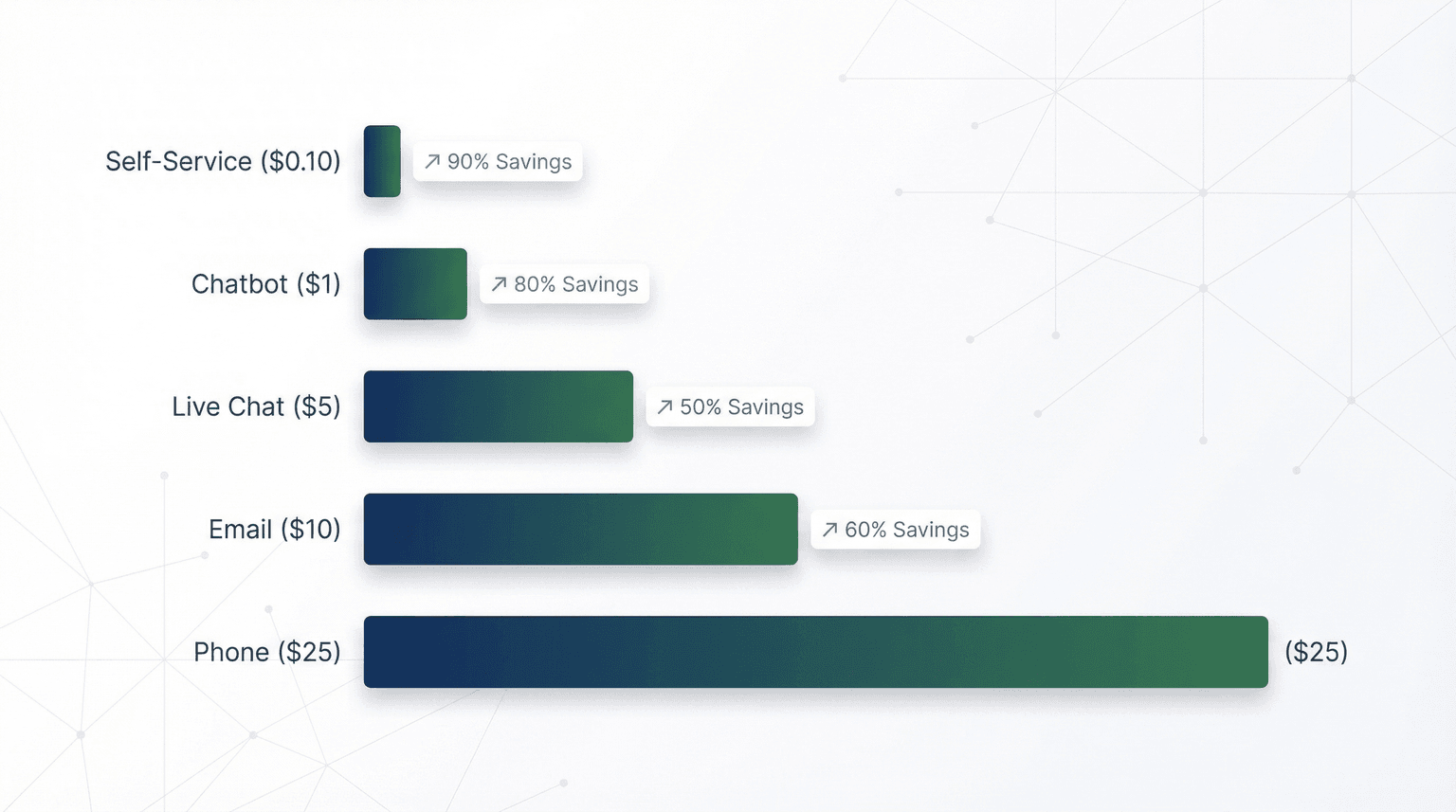
Companies with excellent documentation achieve much better ratios, sometimes supporting 500-1,000 users per support representative. This efficiency comes from users successfully self-serving through comprehensive knowledge bases and searchable documentation.
The scalability implications are profound. A company that needs 10 support staff at 1,000 users will need 100 at 10,000 users under the linear model. A company with superior documentation might handle 10,000 users with just 15-20 support staff.
The Response Time Spiral
When support teams are overwhelmed with preventable questions, response times suffer for everyone. Users with genuine complex issues wait longer because the queue is clogged with basic questions.
Longer response times lead to more frustrated users, more negative reviews, and ironically, more support tickets as users submit follow-ups wondering about the status of their original requests.
Brand Reputation Damage
In the age of software review sites, social media, and community forums, brand reputation can be built or destroyed by customer experiences. Documentation neglect puts your reputation at constant risk.
The Review Site Effect
Users who struggle with your product do not suffer in silence. They share their frustration on G2, Capterra, TrustRadius, and similar platforms. Negative reviews citing poor documentation or confusing interfaces are particularly damaging because they signal a fundamental problem with the user experience.
Prospective customers read reviews carefully. When they see patterns of complaints about confusion, poor onboarding, or lack of helpful resources, they often eliminate your product from consideration before ever trying it.
Word-of-Mouth Damage
For every customer who leaves a public review, dozens share their experiences privately with colleagues and peers. In B2B software, where decisions often involve recommendations from trusted contacts, negative word-of-mouth can close doors you never knew existed.
The inverse is equally true: products with good documentation see 45% higher adoption rates according to Salesforce Research. Satisfied users become advocates who recommend your product, creating organic growth that no amount of marketing spend can replicate.
The Professionalism Perception
Documentation quality signals organizational maturity. When potential customers or partners evaluate your product, they often examine your documentation as an indicator of how seriously you take your work.
Sparse, outdated, or poorly organized documentation suggests that you might cut corners in other areas as well. Comprehensive, well-maintained documentation demonstrates professionalism and commitment to customer success.
For enterprise sales, this perception can be deal-breaking. Procurement teams and IT departments specifically evaluate documentation as part of their vendor assessment process.
Lost Sales and Revenue Impact
Beyond retention, documentation neglect directly impacts your ability to acquire new customers and expand existing relationships.
The Trial Conversion Problem
Most SaaS products offer free trials as part of their acquisition funnel. During the trial period, users decide whether your product delivers enough value to justify payment.
Without documentation to guide trial users toward meaningful experiences, conversion rates suffer. Users sign up with intentions to evaluate thoroughly but give up after initial confusion. They never discover the features that would have converted them into paying customers.
The Upsell and Expansion Barrier
For existing customers, lack of documentation about advanced features limits expansion revenue. Users cannot adopt capabilities they do not understand, and they will not upgrade to higher tiers for features they have never successfully used.
This creates a ceiling on account value that no amount of sales effort can overcome. Until users experience value from your current offering, they have no interest in paying for more.
The Competitive Disadvantage
When prospects compare your product to competitors, documentation quality becomes a differentiator. A competitor with superior user guides, tutorials, and knowledge resources appears more trustworthy and easier to implement.
In competitive evaluations, companies often choose products that seem easier to adopt, even if they are technically less capable. Documentation quality shapes this perception more than most product teams realize.
The Domino Effect: How Documentation Problems Cascade
Documentation neglect rarely manifests as a single, isolated problem. Instead, it triggers a cascade of interconnected failures that compound over time.
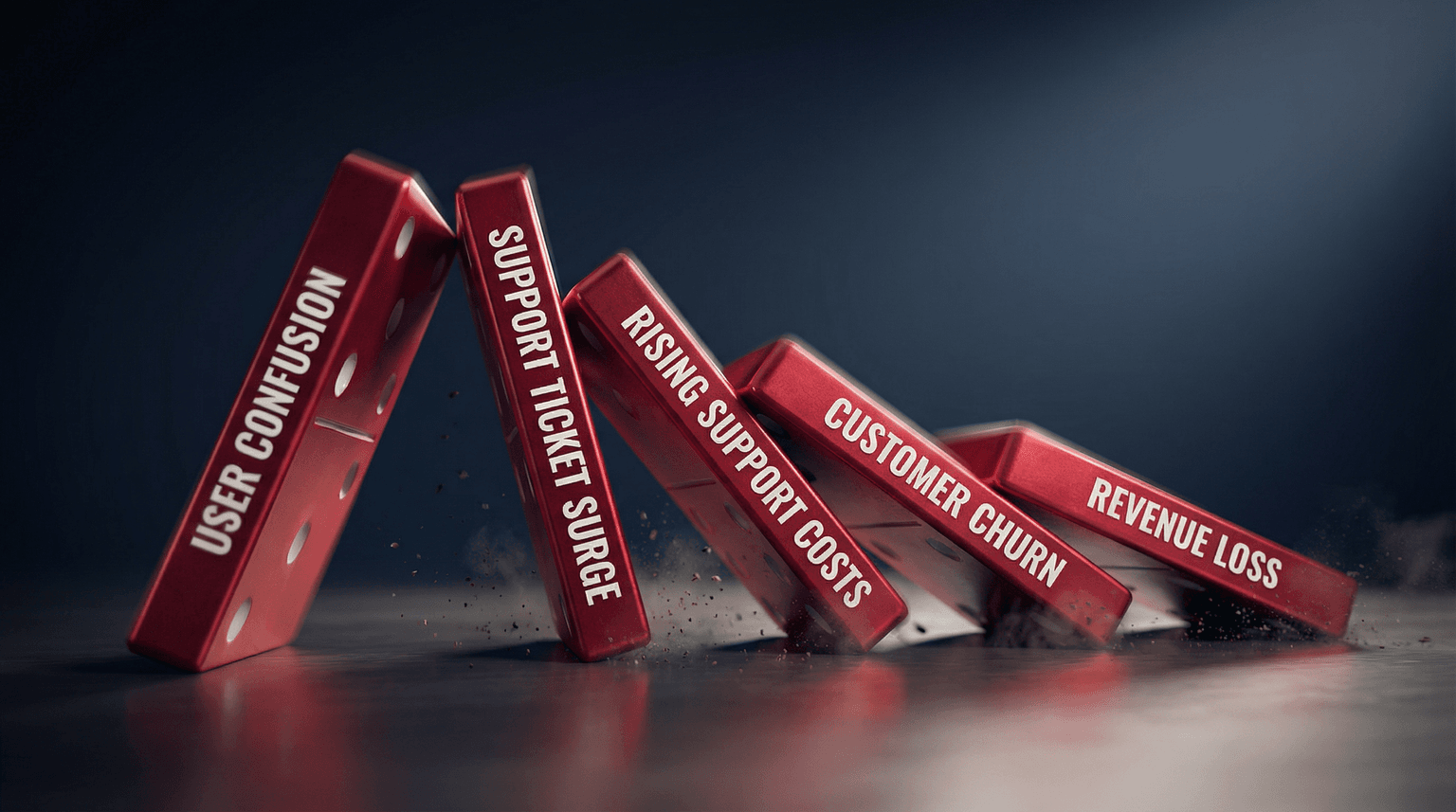
Stage One: Initial Friction
New users encounter confusion. Some submit support tickets. Others struggle silently. A percentage give up entirely within their first session.
Stage Two: Support Overload
Preventable questions flood the support queue. Response times increase. Support team morale decreases. Quality of support interactions suffers.
Stage Three: Reputation Erosion
Frustrated users leave negative reviews. Word-of-mouth becomes negative. Trial conversion rates decline. Customer acquisition cost increases.
Stage Four: Revenue Impact
Churn accelerates. Expansion revenue stalls. New customer acquisition slows. Unit economics deteriorate.
Stage Five: Organizational Strain
Resources shift from growth initiatives to firefighting. Support team turnover increases. Product development slows as engineers are pulled into support escalations. The company enters defensive mode.
The Compounding Nature
What makes this cascade particularly dangerous is its compounding nature. Each stage makes subsequent stages worse. Overwhelmed support teams cannot maintain documentation. Deteriorating documentation creates more support load. The spiral accelerates.
Companies caught in this cascade often fail to identify documentation as the root cause. They see symptoms (high churn, support costs, negative reviews) and address them individually without recognizing the common thread.
Recovery: Turning Documentation into a Product Strength
The good news is that documentation neglect is fixable. Companies that recognize the problem and invest in solutions can reverse the cascade and transform documentation from a liability into a competitive advantage.
Step One: Audit Your Current State
Before improving documentation, understand what you have and what you lack. Conduct a comprehensive audit that examines:
- Coverage: Which features and workflows are documented? Which are not?
- Accuracy: Does existing documentation reflect current product behavior?
- Accessibility: Can users find relevant documentation when they need it?
- Quality: Is the documentation clear, comprehensive, and actionable?
This audit will reveal gaps and prioritization opportunities.
Step Two: Address Critical Gaps First
Not all documentation is equally important. Prioritize based on:
- Frequency: How often do users need this information?
- Impact: What happens when users lack this guidance?
- Complexity: How difficult is the task without documentation?
Onboarding documentation typically offers the highest ROI because it affects every new user. Start there, then expand to common workflows and frequently asked questions.
Using a tool with content import capabilities can accelerate this process by consolidating existing documentation from various sources.
Step Three: Build Sustainable Processes
Documentation is not a one-time project. It requires ongoing maintenance as your product evolves. Establish processes that ensure:
- New features ship with documentation
- Existing documentation is updated when product changes occur
- User feedback informs documentation improvements
- Analytics reveal documentation gaps and opportunities
Documentation analytics help identify which guides users access most, where they struggle, and what they search for but cannot find.
Step Four: Leverage Technology
Modern documentation platforms dramatically reduce the effort required to create and maintain high-quality user guides. AI-powered documentation tools can transform static content into interactive experiences that provide contextual guidance.
Browser extensions that capture screenshots and workflows as you use your product eliminate the traditional friction of documentation creation. What once required dedicated technical writers can now be accomplished by product teams during normal workflows.
Step Five: Measure and Iterate
Establish metrics that connect documentation to business outcomes:
- Support ticket deflection rate
- Trial-to-paid conversion rate
- Time-to-first-value for new users
- Feature adoption rates
- NPS scores and qualitative feedback
Use these metrics to continuously improve your documentation strategy and demonstrate ROI to stakeholders.
The Competitive Transformation
Companies that complete this recovery journey often find that documentation becomes a genuine competitive advantage. When prospects compare solutions, superior documentation signals lower implementation risk and ongoing ease of use.
Support teams can focus on high-value interactions that build customer relationships. Users become advocates who recommend your product because they had positive experiences. The cascade reverses, creating a virtuous cycle of documentation excellence driving business success.
Get this user manual as a live site
Your user manual is already live at yourcompany.dewstack.com, with getting started, features, troubleshooting and glossary all written. Edit it, don't start it.
Start free and get it liveNo credit card. Edit it, don't start it.
Your Software is Only as Good as Your Documentation
We have all been there. You download a new software product, eager to try it out and explore its capabilities. You open it up and stare blankly at the screen. Where do you even begin? What does this button do? And what does that error message mean?
In that moment, you are not just frustrated. You are also starting to doubt the value of the product you just spent money on. After all, if the developers cannot even explain how to use it, how good can it really be?
This is where documentation becomes essential. Good documentation is not just a nice-to-have. It is an essential part of any software product. It unlocks all the value that the product has to offer, and it can be the difference between a customer who becomes a lifelong advocate and one who never uses your product again.
So why do so many software companies neglect their user guides? Some assume that their product is intuitive enough that users will not need documentation. This is a risky assumption. Even the most user-friendly product can have hidden features or complicated workflows that require some guidance.
Others prioritize development over documentation, viewing user guides as non-essential. But investing in documentation up front saves time and resources in the long run. When users have clear, concise instructions to follow, they are less likely to run into issues and less likely to need to reach out to support for help.
Good documentation is user-centric, written with the user in mind, not just the product's capabilities. It anticipates common questions and issues and provides clear, step-by-step instructions. It is also accessible, with multiple formats and channels for users to access it, from online help centers to in-app guides.
Remember: your software is only as good as your documentation.
By investing in user guides and making them an essential part of your product development process, you can set yourself apart from the competition and create lifelong advocates for your brand.
Key Takeaways
| Challenge | Impact | Solution |
|---|---|---|
| Poor onboarding documentation | Higher churn, negative first impressions | Prioritize onboarding guides with clear pathways to first success |
| Undiscovered features | Users feel product lacks capabilities it actually has | Comprehensive feature documentation and contextual help |
| Support team overload | 20-30% higher support costs, team burnout | Self-service knowledge base that deflects common questions |
| Reputation damage | Lower trial conversions, negative word-of-mouth | Professional documentation that signals organizational maturity |
| Scalability ceiling | Linear headcount growth with user growth | Documentation-first culture that enables efficient scaling |
Save Your Product with Dewstack
Great documentation does not have to be a burden. Dewstack makes it easy to create user guides that rescue your product from the documentation graveyard.
Capture guides without the hassle: Dewstack's browser extension lets your team document features as they build them with screenshots, annotations, and step-by-step instructions captured in real-time. No more "we'll document it later."
AI that amplifies your expertise: SmartDocs transforms your documentation into an intelligent knowledge engine. Users describe their needs in plain language and get instant, contextual guidance, like having your best product expert available 24/7.
Start from anywhere: Import existing content from Word, Notion, Confluence, or scattered Google Docs. Dewstack organizes everything into a beautiful, searchable knowledge hub your users will actually want to use.
Know what's working: Analytics reveal which guides users access, where they struggle, and what they are searching for. Continuously improve based on real user behavior. Custom domains and branding make your documentation feel like a premium extension of your product.
Do not let poor documentation sink your product. Try Dewstack for free and give your users the guidance they deserve.
Related Articles:
Ready to Elevate Your Documentation?
Try Dewstack free for 7 days. Create AI-powered documentation that answers questions instantly.
Start a free trialANSWERS TO
Frequently Asked Questions
Here are some common questions that might provide the information you're seeking.
Related Blogs
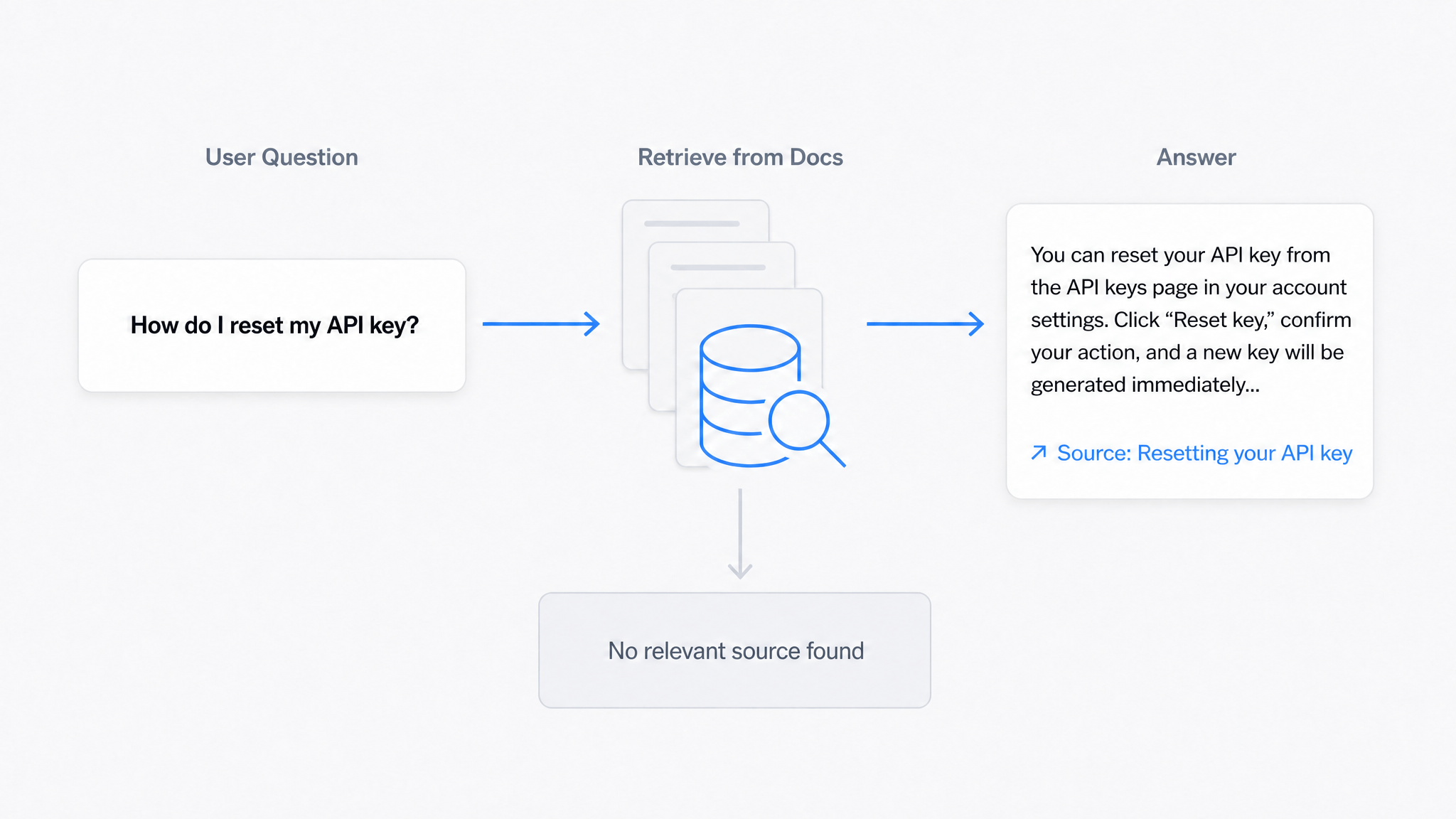
AI Answers From Your Docs: Grounded Answers, Citations & Hallucination Control
How an AI chatbot for technical documentation gives grounded answers with source citations, controls hallucinations, and turns unanswered questions into drafted pages.
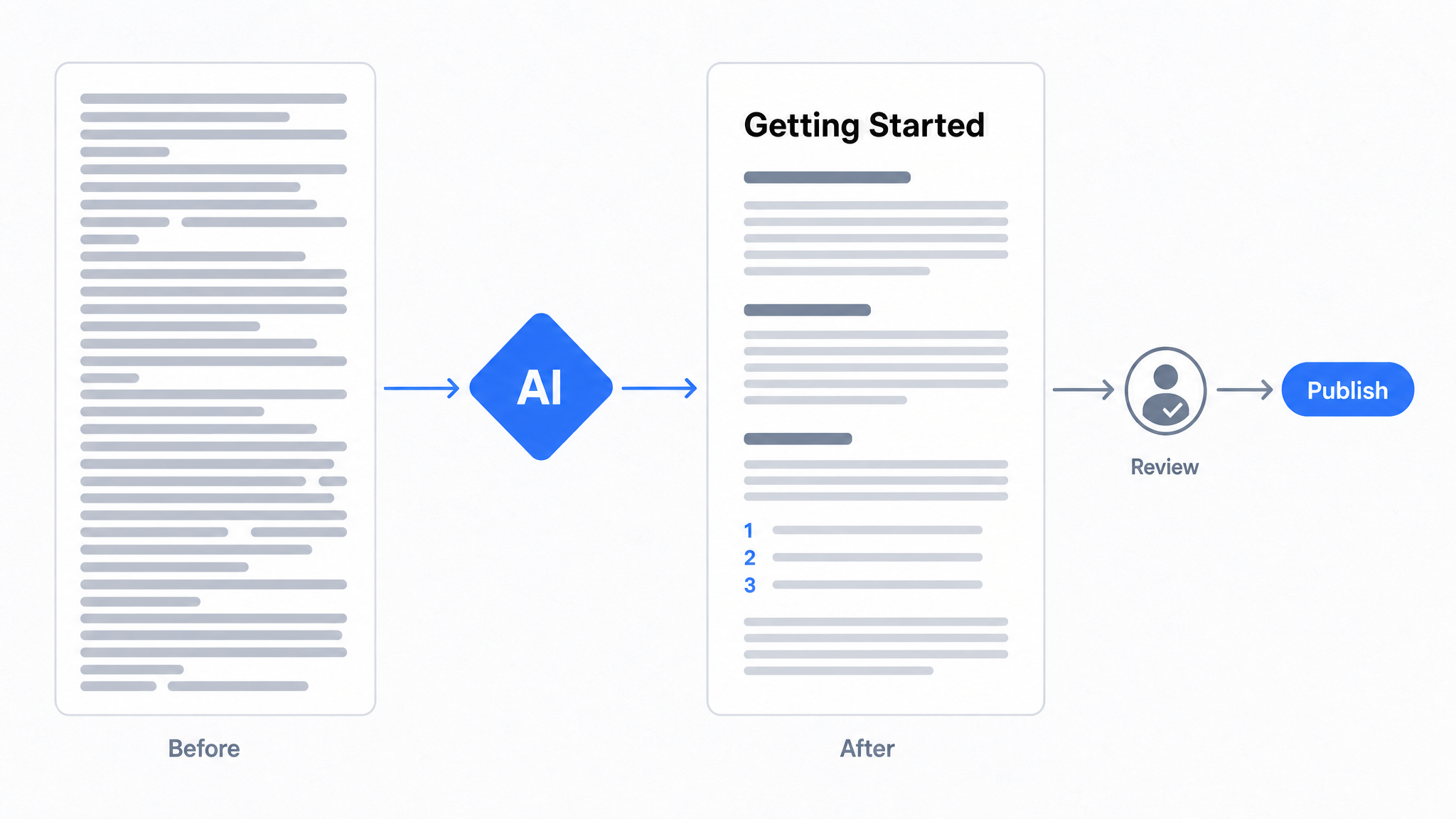
How to Use AI to Improve Existing Documentation
Use AI to audit, rewrite, and translate the documentation you already have, and let a connected agent draft improvements to stale pages for a human to publish.
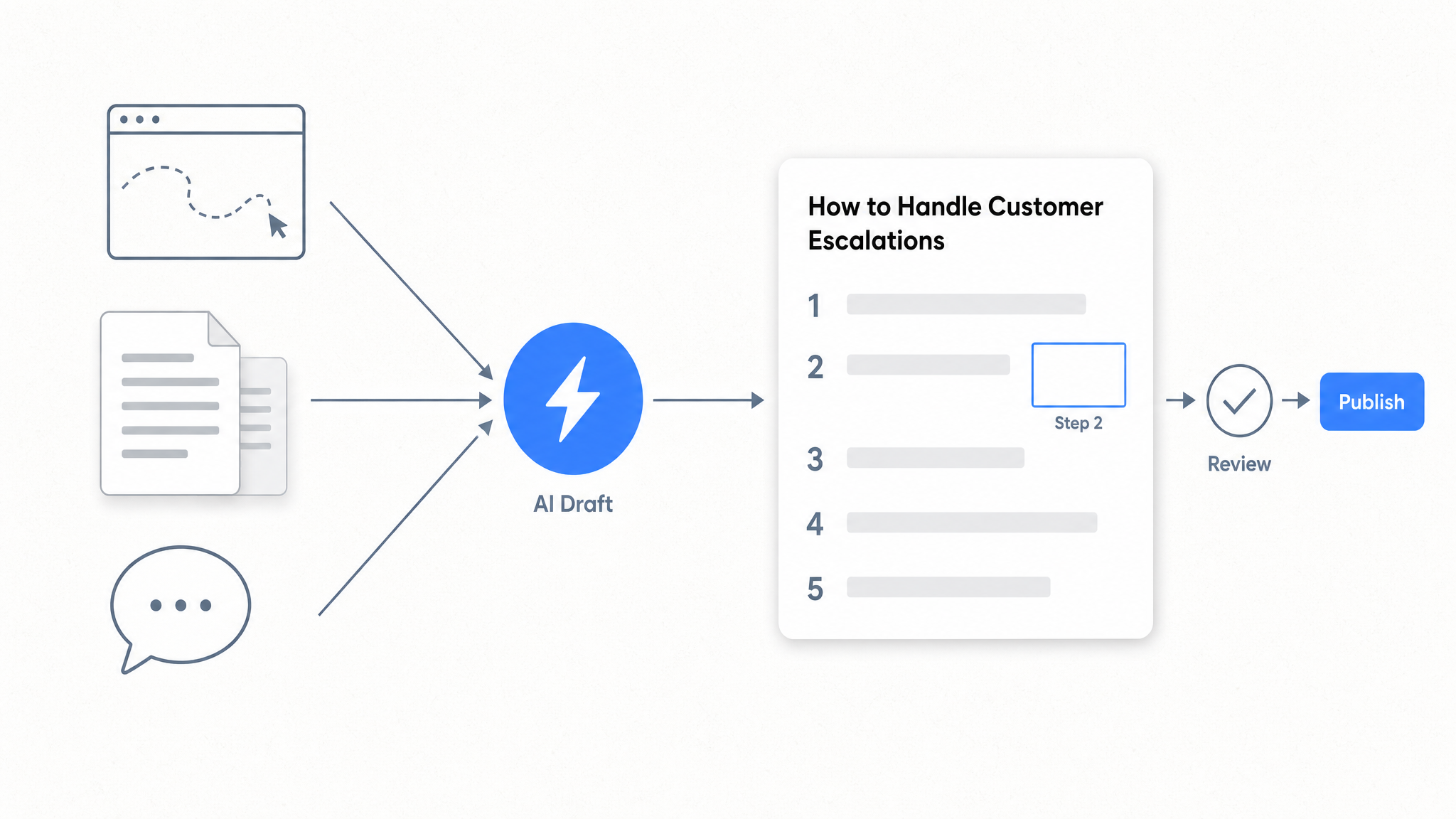
How to Automate SOP Creation with AI
Capture a workflow, let AI draft the SOP, review it, and publish it to a searchable knowledge base your team can query around the clock.
Ready to get started with Dewstack?
Try Dewstack free for 7 days. Create AI-powered documentation that answers questions instantly.
No credit card required.