Manufacturing SOPs: Guide, Examples & Template (2026)


Mastering Efficiency: A Comprehensive Guide to Effective SOPs in Manufacturing
There's a ready-made version of this
Your SOP handbook is already live at yourcompany.dewstack.com: written, structured, searchable. Edit it, don't start it.
Preview itNo credit card. Edit it, don't start it.
Manufacturing facilities that implement well-structured Standard Operating Procedures (SOPs) experience up to 25% improvement in operational efficiency and a 30% reduction in workplace incidents. Yet according to industry research, nearly 60% of manufacturing organizations struggle with outdated, inconsistent, or poorly documented procedures that cost them millions in lost productivity and compliance failures each year.
In an industry where precision matters and margins are tight, the difference between a thriving operation and one plagued by quality issues often comes down to one critical factor: how well your procedures are documented, communicated, and followed. Whether you are pursuing ISO 9001 certification, implementing lean manufacturing principles, or simply trying to reduce errors on the production floor, effective SOPs serve as the foundation for operational excellence.
This comprehensive guide will walk you through everything you need to know about creating, implementing, and optimizing SOPs in manufacturing environments. From real-world examples of quality control and safety procedures to measurable KPIs that demonstrate ROI, you will gain actionable insights to transform your documentation practices.
Key Takeaways
- Efficiency gains are measurable: Organizations with mature SOP programs report 20-25% improvements in productivity and 30-40% reductions in training time for new employees.
- Compliance is non-negotiable: ISO 9001-certified manufacturers must maintain documented procedures, and FDA-regulated facilities face severe penalties for SOP non-compliance.
- Quality control depends on consistency: Well-documented SOPs reduce defect rates by establishing repeatable processes that minimize human error and variability.
- Safety starts with documentation: OSHA statistics show that facilities with comprehensive safety SOPs experience significantly fewer recordable incidents than those without standardized procedures.
- Digital transformation accelerates results: Modern SOP creation software enables faster document creation, easier updates, and better accessibility across shifts and locations.
- Continuous improvement requires measurement: Tracking KPIs like SOP compliance rates, time-to-competency, and process deviation incidents helps quantify the value of your documentation efforts.
Understanding the Importance of SOPs in Manufacturing

Defining Standard Operating Procedures (SOPs)
At its core, a Standard Operating Procedure (SOP) is a documented set of step-by-step instructions that outlines how specific tasks or processes should be performed. SOPs provide clear guidance and eliminate ambiguity, ensuring everyone involved understands the procedures and follows them consistently. This ensures standardization and minimizes the risk of errors, rework, and operational inefficiencies.
In manufacturing contexts, SOPs go beyond simple work instructions. They encompass quality control protocols, safety procedures, equipment maintenance schedules, regulatory compliance requirements, and emergency response plans. A comprehensive SOP system serves as the operational backbone of any manufacturing facility, connecting every department from receiving and production to quality assurance and shipping.
The Role of SOPs in Enhancing Efficiency
Efficiency is the backbone of successful manufacturing operations. SOPs play a pivotal role in enhancing efficiency by eliminating guesswork, reducing downtime, and optimizing resource allocation. By providing a clear roadmap to follow, SOPs enable employees to work in a synchronized manner, ensuring smooth workflow and accelerated production cycles.
Consider a scenario where each employee has their own approach to performing a task. Without SOPs, chaos would ensue, leading to confusion, delays, and wasted resources. SOPs act as a unifying force, bringing consistency and structure to the manufacturing process.
Additionally, SOPs assist in determining the root causes of inefficiencies, enabling continuous improvement efforts. By analyzing documented procedures, manufacturers can identify bottlenecks, streamline processes, and implement changes that lead to increased productivity and cost savings. This aligns directly with lean manufacturing principles that emphasize waste elimination and value stream optimization.
Ensuring Safety and Quality Control through SOPs
Safety and quality control are paramount in the manufacturing industry. SOPs help establish and enforce industry best practices by incorporating safety measures, quality control checks, and compliance requirements.
A manufacturing facility without SOPs places workers at risk. Employees would be left to their own devices, potentially compromising safety protocols and jeopardizing the well-being of themselves and others. SOPs provide a comprehensive framework that ensures all necessary safety precautions are followed, reducing the risk of accidents and injuries.
Moreover, SOPs play a crucial role in maintaining consistent quality across all manufacturing processes. By outlining specific steps and standards to be followed, SOPs minimize the chances of product defects and ensure that every item leaving the production line meets required specifications.
Furthermore, SOPs serve as a valuable tool for training new employees. By providing a detailed guide to follow, new hires can quickly learn correct procedures and become productive members of the manufacturing team. SOPs also serve as a reference point for experienced employees, reminding them of critical steps and quality standards that must be upheld.
Industry Statistics: The Case for Effective SOPs

The business case for investing in robust SOP systems is supported by compelling data from across the manufacturing sector:
Lean Manufacturing Impact
Organizations implementing lean manufacturing methodologies report that standardized work documentation, including SOPs, contributes to significant waste reduction. Companies practicing lean principles have achieved substantial improvements in inventory reduction, lead time decrease, and productivity gains. The foundation of these improvements rests on well-documented, consistently followed procedures.
Six Sigma and Quality Improvements
Six Sigma practitioners emphasize that process documentation is essential for achieving quality targets. Manufacturing facilities that combine Six Sigma methodologies with comprehensive SOP systems typically see meaningful reductions in defect rates and process variation. The DMAIC (Define, Measure, Analyze, Improve, Control) framework relies heavily on documented procedures during the Control phase to sustain improvements.
ISO Compliance Requirements
For manufacturers pursuing or maintaining ISO 9001:2015 certification, documented procedures are not optional. The standard explicitly requires organizations to maintain documented information to the extent necessary to support the operation of processes and have confidence that processes are being carried out as planned. Non-compliance can result in failed audits, lost certifications, and damaged customer relationships.
Safety Performance Correlation
OSHA data indicates that manufacturing facilities with comprehensive written safety programs and SOPs experience meaningfully lower rates of recordable incidents compared to those without standardized procedures. The cost of workplace injuries extends beyond immediate medical expenses to include lost productivity, increased insurance premiums, and potential regulatory penalties.
Training Efficiency Gains
Research on manufacturing training programs shows that organizations with well-structured SOP documentation can reduce new employee time-to-competency significantly. This translates to faster productivity, reduced training costs, and improved employee retention as workers feel more confident in their roles.
Key Elements of Effective SOPs in Manufacturing
Clarity and Simplicity
Effective SOPs should be clear, concise, and easy to understand. Utilizing simple language, visual aids, and logical structure enhances comprehension and minimizes the chances of misinterpretation. SOPs should follow a logical flow, ensuring that each step is clearly defined and sequencing is maintained. By keeping SOPs straightforward, manufacturers can ensure that employees can easily grasp and implement them.
Best practices for clarity include:
- Using active voice and present tense
- Including numbered steps for sequential processes
- Adding photographs, diagrams, or screenshots where helpful
- Defining technical terms and acronyms
- Limiting each step to a single action when possible
Consistency and Standardization
One of the primary objectives of SOPs is to establish consistency and standardization across manufacturing operations. Effective SOPs should be uniform throughout the organization, with consistent formats, terminology, and procedures. This consistency ensures that employees can seamlessly adapt to different processes, departments, or roles, reducing the learning curve and fostering operational excellence.
A standardized SOP template should include:
- Document identification and version control
- Purpose and scope statements
- Required materials and equipment
- Safety precautions and PPE requirements
- Step-by-step procedures
- Quality checkpoints and acceptance criteria
- Troubleshooting guidance
- Revision history and approval signatures
Regular Review and Updates
SOPs should not be static documents. They need to evolve parallel to changes in technology, regulations, and industry trends. Regular reviews of SOPs help identify areas for improvement, reinforce best practices, and ensure that procedures remain relevant and effective. Employees should be encouraged to provide feedback and suggest updates based on their practical experience, fostering a culture of continuous improvement.
Establish a review schedule that includes:
- Annual comprehensive reviews of all SOPs
- Immediate updates following process changes
- Post-incident reviews when deviations occur
- Regulatory update assessments quarterly
- Input collection from frontline operators monthly
Employee Training and Competency
Another crucial aspect of effective SOPs is ensuring that employees are adequately trained and competent in following the procedures outlined. Training programs should be in place to educate employees on the SOPs relevant to their roles, emphasizing the importance of adherence to guidelines for quality, safety, and efficiency. Regular competency assessments can help identify areas where additional training or support may be needed, ensuring that all employees are equipped to perform their tasks effectively.
Documentation and Record-Keeping
Comprehensive documentation and meticulous record-keeping are essential components of effective SOPs. Maintaining detailed records of SOP revisions, training sessions, deviations, and corrective actions not only ensures compliance with regulatory requirements but also serves as a valuable resource for continuous improvement. Documented evidence of adherence to SOPs can be instrumental during audits, inspections, or quality control checks, demonstrating a commitment to operational excellence and regulatory compliance.
Real Manufacturing SOP Examples
Understanding what effective SOPs look like in practice helps bridge the gap between theory and implementation. Here are three essential manufacturing SOP examples:
Quality Control Inspection SOP Example

Purpose: To ensure consistent quality inspection of finished products before release to shipping.
Scope: Applies to all quality inspectors performing final inspection on production line products.
Procedure:
- Verify that inspection equipment (calipers, gauges, visual inspection tools) has been calibrated within the required timeframe.
- Review the product specification sheet for the specific SKU being inspected.
- Select samples according to the AQL (Acceptable Quality Level) sampling plan documented in QC-001.
- Perform dimensional measurements and record results on the inspection form.
- Conduct visual inspection for surface defects, color consistency, and labeling accuracy.
- Compare results against acceptance criteria defined in the specification sheet.
- Mark conforming products with the green inspection stamp and date.
- Segregate non-conforming products in the designated red-tagged area.
- Complete the inspection log with batch number, quantity inspected, and pass/fail determination.
- Notify the production supervisor immediately if defect rates exceed 2% of the sample.
Quality Checkpoint: All measurements must fall within specified tolerances. Any deviation requires supervisor review before lot disposition.
Safety Procedure SOP Example: Lockout/Tagout (LOTO)
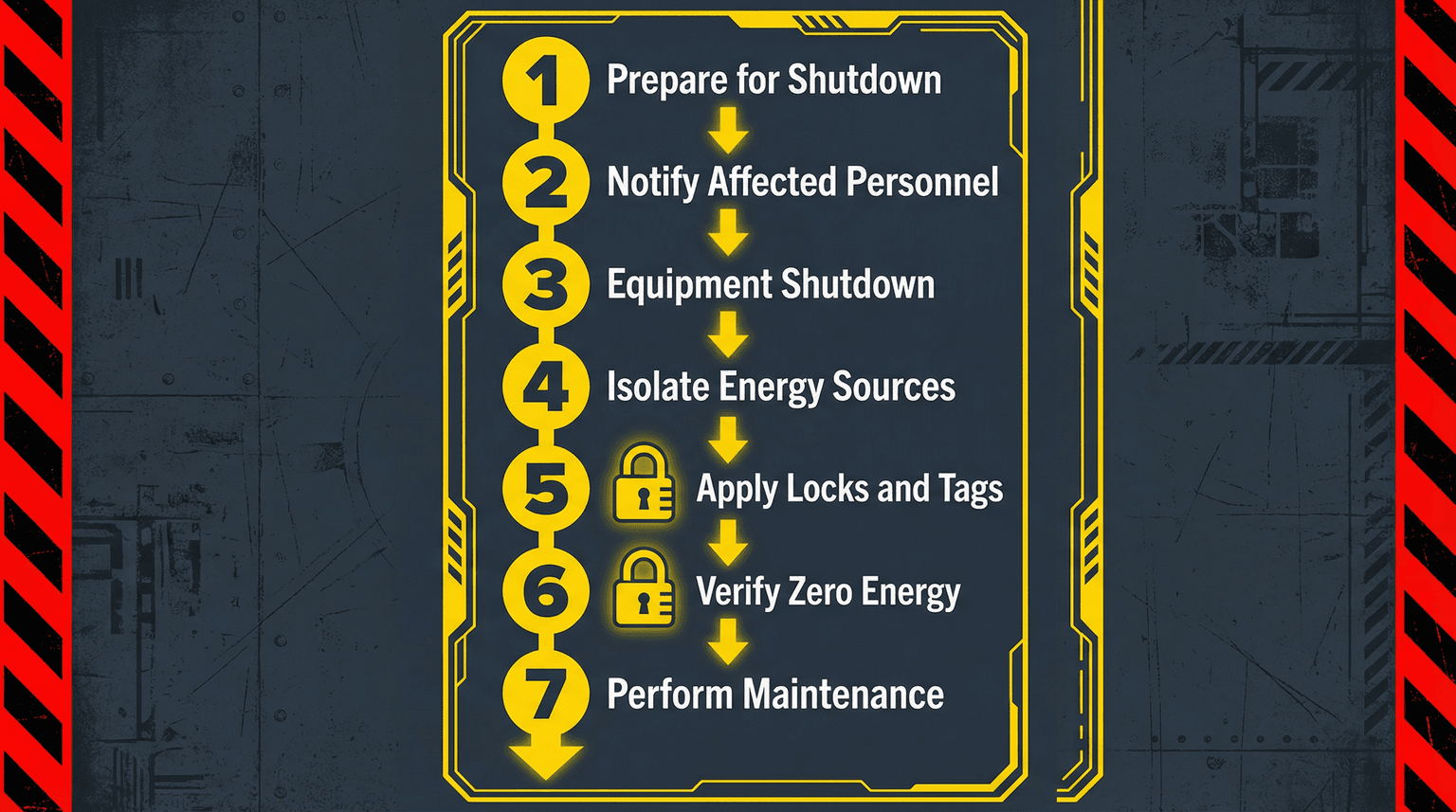
Purpose: To protect employees from hazardous energy during equipment maintenance and servicing.
Scope: Mandatory for all maintenance personnel and machine operators performing equipment service.
Required PPE: Safety glasses, steel-toed boots, insulated gloves (for electrical work).
Procedure:
- Notify all affected employees that a lockout/tagout procedure will be implemented.
- Identify all energy sources (electrical, pneumatic, hydraulic, mechanical, thermal) for the equipment.
- Shut down the equipment using normal stopping procedures.
- Isolate all energy sources using the appropriate disconnect switches, valves, or blocks.
- Apply your assigned lock to each energy isolation device.
- Attach a completed tagout tag indicating your name, department, date, and reason for lockout.
- Release or restrain any stored energy (capacitors, springs, elevated components, pressurized lines).
- Verify zero energy state by attempting to start the equipment using normal controls.
- Perform the required maintenance or service work.
- Before removing locks, inspect the work area to ensure all tools and materials have been removed.
- Verify all guards and safety devices have been reinstalled.
- Remove your lock and tag only after confirming all personnel are clear.
- Notify affected employees that the lockout has been removed and equipment is ready for operation.
Critical Safety Note: Never remove another employee's lock. Only the employee who applied the lock may remove it, except in documented emergency procedures approved by management.
Equipment Maintenance SOP Example: CNC Machine Daily Startup
Purpose: To ensure proper daily startup and operational readiness of CNC machining equipment.
Scope: Applies to all CNC operators at the beginning of each shift.
Procedure:
- Conduct a visual inspection of the machine exterior for any obvious damage, leaks, or obstructions.
- Check coolant level in the reservoir and add approved coolant if below the minimum line.
- Verify that the chip conveyor is clear and operating freely.
- Inspect way covers and wipers for damage or debris accumulation.
- Power on the machine and allow the control system to complete its startup sequence.
- Home all axes following the sequence: Z-axis first, then X-axis, then Y-axis.
- Run the spindle warm-up program (Program O0001) for 10 minutes.
- Check spindle for unusual noise or vibration during warm-up.
- Verify air pressure gauge reads between 85-100 PSI.
- Test the emergency stop function by pressing and releasing the E-stop button.
- Confirm tool magazine rotation operates smoothly through a complete cycle.
- Load the first job program and verify the correct tool list is installed.
- Complete the daily startup checklist form and submit to the shift supervisor.
Maintenance Flag: If any abnormality is detected, do not operate the machine. Tag it out of service and submit a maintenance work order immediately.
These examples demonstrate how effective SOPs combine clear procedural steps with safety considerations, quality checkpoints, and appropriate escalation protocols. For streamlined SOP creation, consider using dedicated SOP creation software that provides templates and collaborative editing features.
Designing an Effective SOP: A Step-by-Step Process

Identifying the Process
The first step in designing an effective Standard Operating Procedure (SOP) is crucial for the success of the entire documentation process. It involves not only observing the existing process but also understanding the underlying reasons for each step. Subject matter experts play a vital role in this phase, providing insights that may not be apparent from a surface-level observation. By delving deep into the intricacies of the process, potential bottlenecks or inefficiencies can be identified and addressed proactively. This initial stage sets the tone for the rest of the SOP development process.
Key activities during process identification include:
- Shadowing experienced operators through complete process cycles
- Documenting current tribal knowledge before it is lost
- Identifying variations in how different shifts perform the same task
- Mapping inputs, outputs, and decision points
- Noting safety hazards and quality-critical steps
Detailing the Procedure
Once the process is identified, the next phase of detailing the procedure requires meticulous attention to detail. Each step must be clearly articulated, leaving no room for ambiguity or misinterpretation. In addition to outlining the sequential steps, it is essential to incorporate decision points, potential deviations, and troubleshooting strategies. By anticipating various scenarios and providing comprehensive guidance, the SOP becomes a reliable resource for employees at all levels of the organization. Moreover, the inclusion of real-life examples or case studies can further enrich the document and enhance practical understanding.
Validation and Pilot Testing
Before rolling out a new SOP across the organization, conduct validation testing with a small group of operators. Have them follow the documented procedure exactly as written while observers note any confusion, missing steps, or improvement opportunities. This pilot phase often reveals gaps that were not apparent during the drafting process.
Training and Implementation
Training and implementation are pivotal stages in the life cycle of an SOP. Effective training ensures that employees not only understand the document but also feel empowered to follow it accurately. Workshops or hands-on training sessions can simulate real-world scenarios, allowing staff to familiarize themselves with the procedures in a controlled environment. Moreover, creating a feedback loop where employees can share their experiences and suggest improvements fosters a culture of continuous enhancement. Regular audits and assessments can gauge the effectiveness of the SOP and highlight areas for refinement, ensuring its relevance and applicability over time.
Get this SOP handbook as a live site
Your SOP handbook is already live at yourcompany.dewstack.com: written, structured, searchable. Edit it, don't start it.
Start free and get it liveNo credit card. Edit it, don't start it.
Overcoming Common Challenges in SOP Implementation
Resistance to Change
Introducing new SOPs may encounter resistance from employees who are accustomed to an old way of doing things. To overcome this challenge, it is essential to communicate the benefits of the SOPs and highlight how they contribute to individual and organizational success. Addressing concerns, providing adequate training, and involving employees in the SOP development process can significantly minimize resistance.
Strategies for overcoming resistance:
- Involve frontline workers in SOP development from the beginning
- Explain the "why" behind each procedure, not just the "what"
- Recognize and reward early adopters and SOP champions
- Address concerns openly and incorporate valid feedback
- Demonstrate leadership commitment by following SOPs consistently
Lack of Understanding or Training
Insufficient understanding of the SOPs or lack of proper training can hinder successful implementation. Organizations should invest in comprehensive training programs to ensure that employees are equipped with the knowledge and skills required to follow the SOPs effectively. Regular refresher courses and documentation updates can bridge any knowledge gaps that may arise.
Inadequate Monitoring and Enforcement
An often overlooked aspect of SOP implementation is the need for continuous monitoring and enforcement. Regular audits, performance evaluations, and corrective actions should be undertaken to verify compliance, identify deviations, and reinforce adherence to the established SOPs. Transparency and accountability play vital roles in ensuring the effectiveness of the SOPs.
Furthermore, it is crucial for organizations to establish clear communication channels for reporting any issues or deviations from the SOPs. Employees should feel empowered to raise concerns or suggestions for improvement without fear of retribution. Open dialogue fosters a culture of continuous improvement and ensures that SOPs remain relevant and effective in a dynamic business environment.
Technology and Accessibility Barriers
Many manufacturing facilities struggle with SOP accessibility. Paper-based systems become outdated, damaged, or lost. Digital systems may not be accessible on the production floor. Modern documentation platforms solve these challenges by providing mobile-friendly access, offline capabilities, and instant search functionality that puts procedures at operators' fingertips exactly when needed.
Measuring the Success of SOPs: KPIs and Metrics

Key Performance Indicators (KPIs) for SOPs
Measuring the success of Standard Operating Procedures (SOPs) requires the establishment of Key Performance Indicators (KPIs) that align with the organization's objectives. Regularly tracking and analyzing these metrics provides insights into the impact of SOPs on overall performance and facilitates data-driven decision-making.
Essential SOP KPIs to Track:
| KPI | Description | Target Range |
|---|---|---|
| SOP Compliance Rate | Percentage of audited processes following documented SOPs | >95% |
| First-Pass Yield | Products passing quality inspection on first attempt | Industry-specific |
| Time-to-Competency | Days for new employees to achieve independent operation | 20-30% reduction |
| Process Deviation Incidents | Number of documented deviations from SOPs per month | Trending downward |
| Training Completion Rate | Percentage of required SOP training completed on schedule | 100% |
| SOP Currency | Percentage of SOPs reviewed within the required timeframe | 100% |
| Near-Miss Reports | Safety near-misses reported (higher is better for culture) | Trending upward |
| Recordable Incident Rate | OSHA recordable incidents per 200,000 hours worked | Below industry average |
Continuous Improvement and Adaptation
Success should not be viewed as a one-time achievement; instead, it should be an ongoing pursuit. Continuous improvement is crucial for SOPs to remain relevant, effective, and adaptable to ever-evolving manufacturing environments. Encouraging feedback, conducting periodic reviews, and fostering a culture of continuous learning and improvement are essential to maximize the benefits of SOPs.
Implement a continuous improvement cycle for SOPs:
- Plan: Identify SOPs that need improvement based on KPI data
- Do: Implement revisions with input from subject matter experts
- Check: Measure the impact of changes on relevant KPIs
- Act: Standardize successful improvements and share best practices
The Impact of Effective SOPs on Overall Productivity
Effective SOPs have a direct impact on overall productivity in manufacturing operations. They enhance efficiency, reduce errors, ensure consistency, and promote accountability. By providing clear guidelines, SOPs empower employees at all levels to perform their tasks with confidence and precision.
Moreover, effective SOPs contribute to a safer work environment by outlining proper safety protocols and procedures. This not only reduces the risk of accidents and injuries but also fosters a culture of safety awareness among employees.
Furthermore, SOPs play a vital role in ensuring regulatory compliance. By documenting and standardizing processes, manufacturers can easily demonstrate adherence to industry regulations and quality standards. This not only helps avoid penalties and legal issues but also enhances the organization's reputation as a reliable and compliant manufacturer.
Ultimately, the positive impact of effective SOPs on overall productivity extends beyond the manufacturing floor. Streamlined operations, faster production cycles, reduced downtime, and improved customer satisfaction all contribute to the organization's bottom line. By consistently meeting or exceeding customer expectations, manufacturers can build strong relationships, enhance brand loyalty, and gain a competitive edge in the market.
Calculating ROI on SOP Investments
To justify investment in SOP development and management systems, consider tracking these financial metrics:
- Reduced rework costs: Track scrap and rework expenses before and after SOP implementation
- Training cost savings: Compare training time and resources for new hires
- Audit preparation time: Measure hours spent preparing for compliance audits
- Incident-related costs: Calculate savings from reduced safety incidents and workers' compensation claims
- Customer complaint reduction: Quantify the cost of quality issues that reach customers
Organizations that invest in professional SOP creation software and documentation systems typically see positive ROI within the first year through these combined savings.
FAQs
What are Standard Operating Procedures (SOPs) in manufacturing?
Standard Operating Procedures (SOPs) are documented instructions designed to standardize the execution of tasks within manufacturing operations. They ensure processes are performed efficiently, safely, and to consistent quality standards while minimizing errors and operational inefficiencies.
How do SOPs enhance efficiency in manufacturing?
SOPs boost productivity by offering clear guidance that reduces guesswork and downtime while optimizing how resources are allocated. They enable synchronized worker performance, accelerate production cycles, and help identify inefficiency sources for continuous improvement efforts.
What role do SOPs play in ensuring safety and quality control in manufacturing?
SOPs incorporate safety measures and quality control checkpoints throughout manufacturing processes. They establish industry best practices, enforce compliance requirements, reduce accident risks, maintain consistent product quality, and serve as valuable training resources for new employees.
What are the key elements of an effective SOP in manufacturing?
Effective SOPs should be clear, concise, and understandable using simple language and visual aids. They must maintain consistent formatting across the organization, receive regular updates, include comprehensive employee training programs, and feature detailed documentation and record-keeping practices.
What common challenges might occur during SOP implementation?
Common obstacles include resistance to change, inadequate understanding, and insufficient monitoring. These challenges can be overcome through employee involvement in development, comprehensive training programs, clear communication about benefits, and establishing strict compliance monitoring mechanisms.
Power Your Manufacturing SOPs with Dewstack
In manufacturing, every second counts and so does every documented procedure. Dewstack gives your production teams the documentation platform they need to maintain quality, ensure safety, and drive continuous improvement.
Document procedures right on the floor: With Dewstack's browser extension, quality managers and supervisors can capture SOPs as they observe processes, adding screenshots, annotations, and step-by-step instructions in real-time. No more outdated documentation based on guesswork.
AI that keeps your team informed: Dewstack's SmartDocs feature provides instant, AI-powered answers to operator questions about procedures, safety protocols, and equipment handling. Reduce downtime by giving workers the information they need, when they need it.
Consolidate all your manufacturing docs: Import existing SOPs from legacy systems, Word documents, or spreadsheets into one unified platform. Dewstack's powerful search and categorization ensures every procedure is just a click away.
Track compliance and drive improvement: Built-in analytics show you which SOPs are being accessed, helping identify training needs and compliance gaps. Version control ensures everyone works from the latest approved procedures, while custom branding makes your SOP portal unmistakably yours.
Ready to bring your manufacturing SOPs into the digital age? Try Dewstack for free and discover how intelligent documentation can transform your operations. See pricing to find the plan that fits your plant.
Ready to Elevate Your Documentation?
Try Dewstack free for 7 days. Create AI-powered documentation that answers questions instantly.
Start a free trialANSWERS TO
Frequently Asked Questions
Here are some common questions that might provide the information you're seeking.
Related Blogs
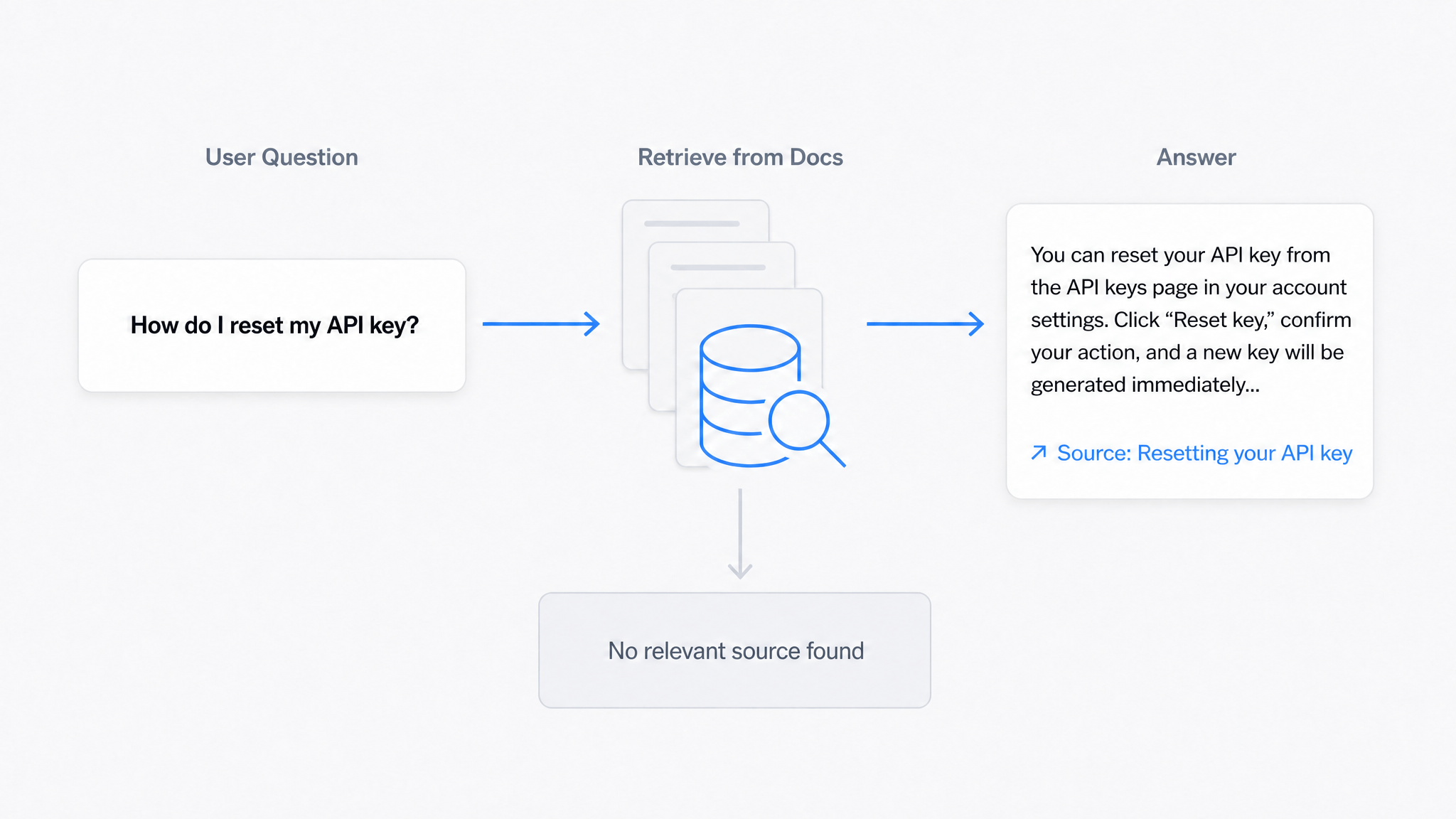
AI Answers From Your Docs: Grounded Answers, Citations & Hallucination Control
How an AI chatbot for technical documentation gives grounded answers with source citations, controls hallucinations, and turns unanswered questions into drafted pages.

How to Use AI to Improve Existing Documentation
Use AI to audit, rewrite, and translate the documentation you already have, and let a connected agent draft improvements to stale pages for a human to publish.

How to Automate SOP Creation with AI
Capture a workflow, let AI draft the SOP, review it, and publish it to a searchable knowledge base your team can query around the clock.
Ready to get started with Dewstack?
Try Dewstack free for 7 days. Create AI-powered documentation that answers questions instantly.
No credit card required.